Raising Children Across Borders: Schools, Language, Going Home
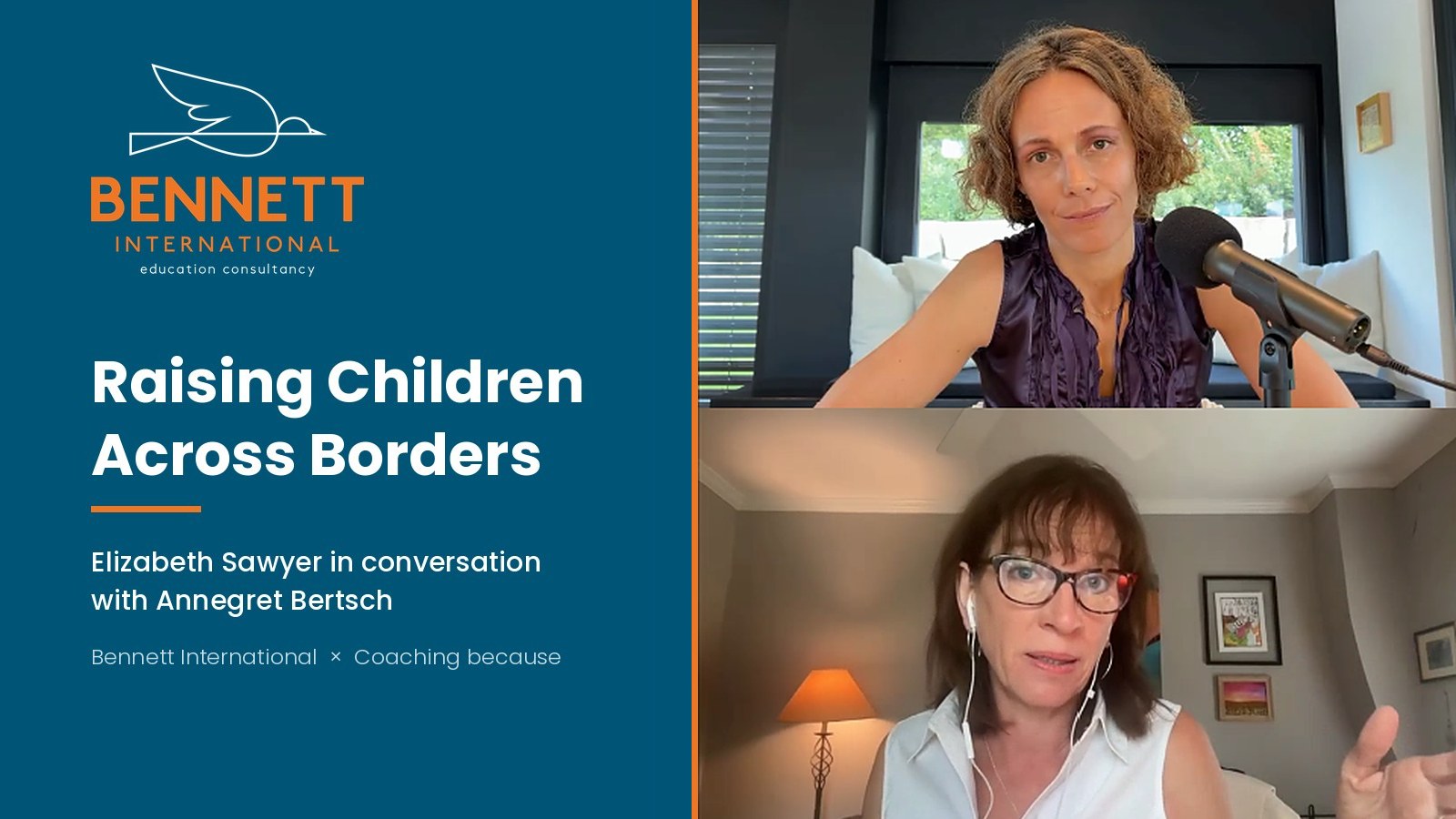
Bennett CEO Elizabeth Sawyer joins expat coach Annegret Bertsch on the Expat Insights podcast to talk about choosing schools abroad, keeping a home language alive, and planning for the day a family goes home.
This conversation was hosted by Annegret Bertsch, founder of Coaching because. Annegret is a certified coach (ICF ACC) who works with expats and repats through the transitions of moving abroad and returning home. She has lived in Europe, America and Asia, and repatriated to Germany herself, so she knows both halves of that journey firsthand.
Alongside one-to-one coaching, Annegret runs two six-week programs, Expatriation Made Easy and Repatriation Made Easy, and hosts the Expat Insights podcast, where she explores the ups and downs of expat life, from culture shock and identity shifts to building a new sense of home. Elizabeth was her guest for episode 15, “Crossing Borders, Changing Schools – What Expat Parents Need to Know About Their Child’s Education,” and you can listen to the full conversation on Spotify or Apple Podcasts. You can also find Annegret on Instagram. We’re grateful to her for the invitation and for such thoughtful questions.
In the highlights below, Elizabeth talks about what “international” means from one school to the next, what to look for on a school visit, how families can maintain their home language, and why it helps to keep the option of going home open from the very first assignment.
What should families understand about “international” schools?
“International” has never been patented, and it means different things in different places. There are traditional international schools, many of which were founded by embassies or by groups of corporations to serve an expat population. That was many years ago, and the whole world of international education has evolved.
Many times an international school has been founded with a local population in mind, families who want a different kind of education from what the local system offers. So I always say, really examine an international school to see what it’s about. A real international program should be international in three areas: curriculum, student demographic, and teaching body.
How do you help parents choose the right school for their child?
You can speak to people at a school over the phone, but when you go and walk the halls and stick your head in classrooms, you get a feel for the texture of life at the school. The student who says, “Ma’am, can I help you?” The tradition of greeting students at the door when they come in. All of those things create a vibe, and you’re looking for the right vibe for your kid.
That’s also why, when you relocate, your colleagues will offer well-intentioned advice: “You’ve got to look at these schools,” or “My kids go to this school and they love it.” I always say that’s great, but put those lists to the side and start with who your child is.
This is not a selectivity competition. It’s figuring out which environment is going to feel like home for your kid. Start there, and don’t feel the pressure.
What should parents prioritize when they visit schools?
Go into visits with a little list in the back of your mind. Are you looking for a super small class size? Or do you have one of those kids who just loves an ocean of possibility? How focused are you on facilities, versus the qualifications and tenure of the teachers?
This is where people have very different priorities. For some families, if the gym looks good, or they like the recording studio or the robotics room, that’s really important to them. So have your list of what matters to you, and ask to see those things. If your child is really into music and you don’t stop at the music room on the tour, ask: “Can we see the music room?” Explore, and ask questions about the aspects of education that are important to you.
What’s it like getting to know a new school system?
Whether you’re repatriating or going on assignment, learning the new system is a project in itself. What are the protocols? How and when do parents engage with the school? Are you welcome to stop in any time, or do you have to call and make an appointment? What’s the schedule like? How does grading work?
If my child comes home with a particular grade, is that good? Is it bad? If they say “satisfactory,” do they really mean satisfactory? Give yourself time to learn that, and be gentle with yourself when you’re confused at first.
Why should families think about going home from the very start?
Families need to keep in mind that at some point they’re going to want to go home again. A lot of families go on their first assignment thinking, “We’re going to go home in two years.” It rarely works that way. It ends up being, “We left in 1990 thinking we were going to be gone for three years, and 20 years and seven countries later, we finally went home. It wasn’t home anymore.”
Regardless of whether it’s going to be two years or twenty, you want to keep the option of going home, and stepping back into the home country education system, a possibility for your child.
How can children keep up their home language while abroad?
The first obvious piece is to maintain their home country language. The natural evolution, I think, is that families go on assignment and continue to speak to their kids in their home language, and after a while the kids switch to the local language. Parents know they still understand it, and it’s the language they pull out in the summers when they visit their grandparents back home.
But I think approaching language maintenance seriously is very important, and that means having students both read and write it at an academic level. Bring books. Maybe arrange tutoring. Ask your kids to write letters home to their grandparents in German or French or Spanish or English, whatever the language might be. And ask your employer if they have a benefit that provides for home country language maintenance, because some companies will pay for tutoring.
How do curricula and qualifications fit together when a family moves between countries?
There’s the IB, which was invented for students in exactly this situation, to give them continuity of education and then an internationally recognized qualification with which they can apply to university. But American universities take A Levels. British universities take American APs. Dutch universities take students from all over the world. So there are more and more ways to qualify for university in different countries.
That’s higher education, and it’s sometimes almost easier than the step before: you’re 16, and you want to go home and step back into your home country system for two years. That’s often where the ask is really tough, and families need to be realistic. Are we going to educate our child all over the world and then have them do A Levels at 16? Or study all over the world and come back for the French baccalaureate? Is that realistic?
What do all these places mean to a child in the long run?
I think places are like people in our lives, and they have a huge impact. I’ve realized that the role of Ireland in my life is like the role of a person I had to go back to. If you think about locations and relocation like that, every place you go is another person in your child’s life: another adventurous, open and, hopefully, benign one.
Planning a move, or a move back?
Every family’s route is different, and so is every child. If this conversation raised questions about your own move, our overview of what “international” means from one school to the next goes deeper on the first topic Elizabeth covers, and our services for families explain how we work with parents before, during and after a relocation.
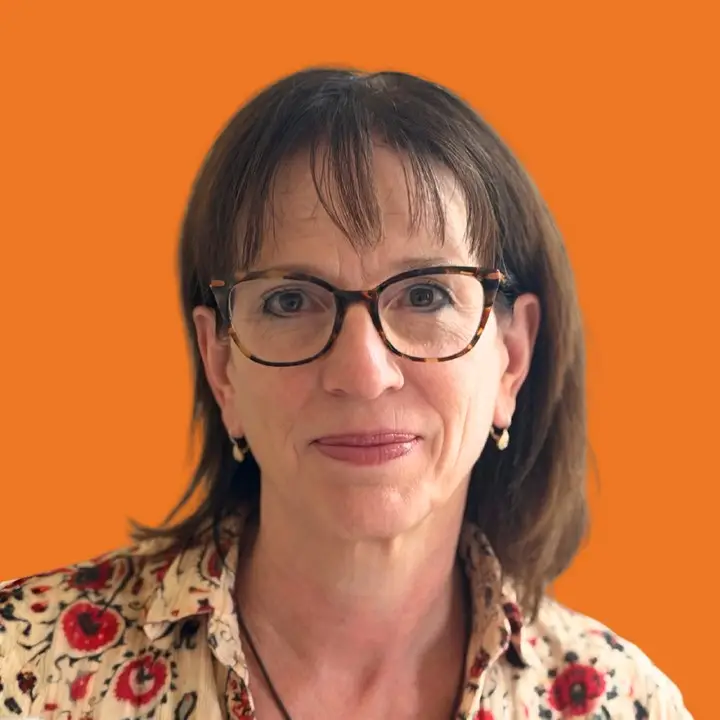
Elizabeth Sawyer is the CEO of Bennett International Education Consultancy. She acquired the company in 2009 and has grown it into a global practice of more than 70 consultants, expanding its reach with the acquisition of School Choice International in 2018. Elizabeth spent the first twelve years of her life overseas, moving through five different education systems between Ireland and New York, and went on to teach English, French and Spanish at private high schools in the US for fifteen years. That combination of firsthand experience as a relocating child and a career in the classroom shapes how Bennett works with families, and with the corporate and RMC teams supporting them.
Bennett International Education Consultancy works directly with hundreds of families each year across the globe. We support families by helping them make informed decisions about the best-fit schools for their children; with our guidance, they secure placement in preschools, private day schools, public/state schools, boarding schools, colleges and universities, including schools with particular programs, such as special needs support.