Moving from the US to England: How the Curriculum Compares
Moving from the US to England and wondering what your child will actually be taught? England has a national curriculum and the United States does not, and most of what an arriving family notices in the first term flows from that single difference.
In the US, curricular decisions are largely made state by state and district by district. In England, state-funded schools teach to a national curriculum organised by Key Stage, so a Year 4 class in Cornwall and a Year 4 class in Newcastle are working towards broadly the same things. Academies have some freedom over how they teach, but in practice the framework is shared. For a relocating family this is good news: what your child will learn is knowable in advance.
The early years: earlier and more structured
Formal learning starts younger in England. Reception, the year a child turns five, follows the Early Years Foundation Stage, which sets out three prime areas (communication and language; physical development; and personal, social and emotional development) and four specific areas (literacy; mathematics; understanding the world; and expressive arts and design). Phonics begins almost immediately, and children are expected to be reading and writing simple sentences by the end of the year.
An American parent used to a play-based Pre-K may find this brisk. It is fair to say that children in England are asked to focus on academic skills earlier than their American peers, and most adapt quickly. The first formal check comes in Year 1, with a short phonics screening that tells the school which children need more support with decoding.
Key Stages 1 and 2: the primary years
From Year 1 to Year 6 the compulsory subjects are English, mathematics, science, design and technology, history, geography, art and design, music, physical education and computing, with a foreign language added at Key Stage 2. Religious education must also be provided, but parents may withdraw a child from it; relationships and health education is taught throughout. Compared with a typical American elementary school curriculum, the striking additions are design and technology and the early foreign language; overall, the early formalisation of subjects that in the US would sit inside a broader social studies strand.
Assessment is lighter than the system’s reputation suggests. At the time of writing, the statutory checks in primary school are the Year 1 phonics screening, a multiplication tables check in Year 4, and the Key Stage 2 tests at the end of Year 6 in reading, mathematics, and grammar, punctuation and spelling. The Year 2 tests are no longer compulsory. These are used to understand the school as much as the child; they do not track a pupil into a route the way examinations later will.
Key Stage 3: the broad years
Years 7 to 9 are the most generous point of entry for an older child from the US. The curriculum stays broad, with English, mathematics, science, history, geography, a modern foreign language, design and technology, art and design, music, physical education, citizenship, computing, religious education and relationships education all compulsory, and there are no national examinations. A child arriving in Year 8 from seventh grade has time to settle before anything is decided.
Key Stage 4: the GCSE years
In Years 10 and 11 the curriculum becomes focused on GCSEs and eventual GCSE exams. English, mathematics and science are compulsory; students then choose from the arts, design and technology, the humanities and languages to make up eight to ten subjects in all. The courses run for two years and end in national examinations graded 9 to 1. Because they are two-year sequences, joining part-way through is not feasible, and this is the point at which we most often suggest an American-curriculum or international school for a child arriving from the US.
This part of the education system is in the middle of a considered reform. Following a national curriculum and assessment review published in November 2025, the government has agreed to reduce the total volume of GCSE examination time, to retire the EBacc accountability measure that had pushed schools towards a fixed set of subjects, and to introduce a revised national curriculum from 2028. The shape of GCSEs will not change for a child arriving now, but a family with a younger child should expect changes in the system over the next few years.
Sixth form: specialising at sixteen
After GCSEs, the academic route narrows sharply. A-Level students typically study three subjects in depth over Years 12 and 13, and those choices shape which university courses are open to them. An American student who would have carried six or seven subjects through twelfth grade can find this either liberating or alarming. Technical and vocational routes exist alongside, through T Levels and, from 2027, the new V Levels; all young people stay in some form of education or training until eighteen.
What this means for an American child at each age
For a child up to Year 6, the English system is more structured than the US system, but very accessible to younger students, who will adapt quickly. From Year 10 onwards, the examination sequencing means a family should look carefully at whether the state system, an independent school following the English curriculum, or an American or international school is the better fit, and the answer depends on the child, the length of the assignment and where university is likely to be. That is a conversation worth having before the house is chosen.
Planning a Move to England?
The companion pieces cover how the school system is structured and how to register for a state school place. Families moving the other way will find the US side of this comparison in how American schools compare. Still deciding between England and somewhere else? Our guide to leaving the US with children shows how the school question shapes the rest of the move.
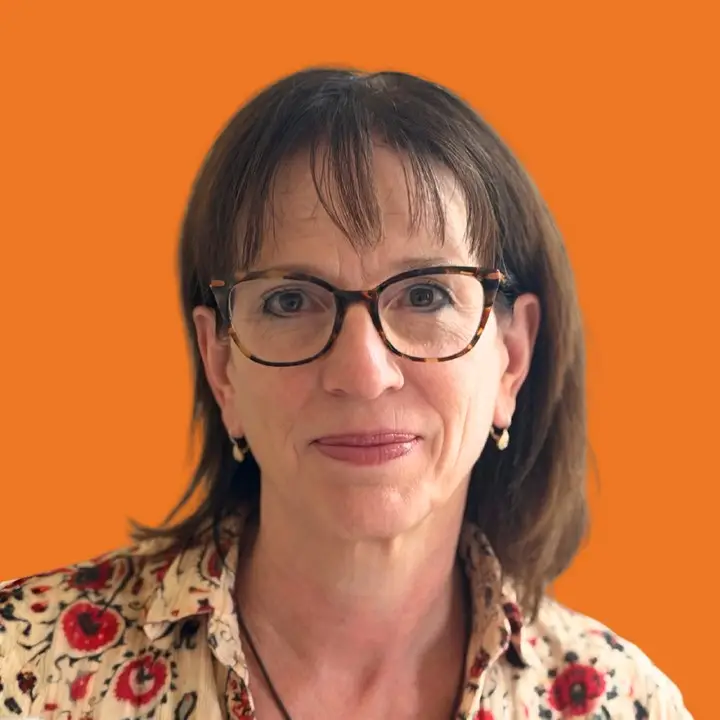
Elizabeth Sawyer is the CEO of Bennett International Education Consultancy. She acquired the company in 2009 and has grown it into a global practice of more than 70 consultants, expanding its reach with the acquisition of School Choice International in 2018. Elizabeth spent the first twelve years of her life overseas, moving through five different education systems between Ireland and New York, and went on to teach English, French and Spanish at private high schools in the US for fifteen years. That combination of firsthand experience as a relocating child and a career in the classroom shapes how Bennett works with families, and with the corporate and RMC teams supporting them.
Bennett International Education Consultancy works directly with hundreds of families each year across the globe. We support families by helping them make informed decisions about the best-fit schools for their children; with our guidance, they secure placement in preschools, private day schools, public/state schools, boarding schools, colleges and universities, including schools with particular programmes, such as special needs support.