Choosing Where to Live in Tokyo Around Your Child’s School
Tokyo’s international schools are spread across a vast metropolitan area, while relocating families tend to settle in a small number of neighborhoods. That mismatch is why the address you choose can quietly decide which schools are realistic, and why settling the school before signing the lease is usually the order that works.
Many families arrive in Tokyo with a clear picture of living in the city center, often before they have looked at a single school. That is understandable, and plenty of families do live centrally and are glad of it. It is also true that only some of the schools are there.
Bennett’s Asia-Pacific consultant Yun Sun has answered the broad questions about Tokyo schools in Moving to Tokyo with Kids? 8 Questions About Tokyo Schools, Answered. This post takes one of those questions, school or neighborhood first, and works through it in more detail: how geography shapes the search, what the trade-off between a central and a suburban campus involves, and how to sequence the housing decision so it does not narrow the school decision before you have made it.
Schools Spread Out, Families Cluster
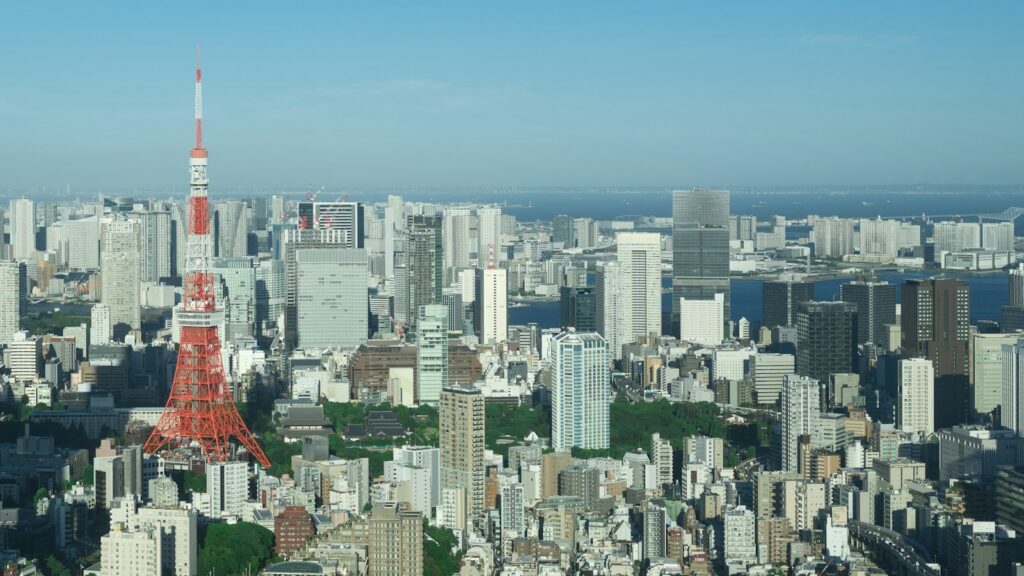
Tokyo has fewer international schools than Singapore or Hong Kong, but a remarkably varied range, and they are not gathered in one district. They sit across the greater metropolitan area: some in the center, others well outside it. Relocating families, by contrast, tend to settle in the same few residential neighborhoods.
The practical effect is that the schools within a reasonable commute of those neighborhoods are the ones most families apply to, and places there can be limited. Some schools keep a waiting pool rather than admitting everyone who qualifies. A family that has already fixed its address has, without meaning to, narrowed its own choice to the schools that happen to be reachable from it.
Reverse the order and the picture changes. A family that has settled the school first can look at the neighborhoods within an easy journey of it, and the search for a home starts from a known point rather than a guess.
Compact in the Center, Larger Further Out
Space in central Tokyo is scarce. Campuses in the city center tend to be compact, and some have no sports field of their own. The larger campuses, with more extensive facilities, sit further outside the city. For a family living centrally, that is a real trade-off: a shorter school commute against more space, more sport and a wider range of activities.
Families weigh it differently, and the age of the child is usually what tips it. A short journey matters most for young children, for whom a long daily commute is tiring and the facilities matter less. Older students often value the space, the sports and the breadth of a larger campus, and are better able to make a longer journey, frequently on their own.
There is no right answer here, only the right answer for your child at this stage. It is worth deciding what you are optimizing for before you visit, because a compact central campus and a large suburban one can both be fine schools and still be the wrong fit for the same family.
Living Near the School, or Along Its Route
Once the school is settled, there are two sensible ways to choose a home. The first is to live near the school. The second is to live along one of its bus routes, where it runs them.
That qualifier matters. In Tokyo, many international schools run only limited bus routes, and some run none at all, so check with each school rather than assuming a bus will be available. Where a school does run a route, ask where it stops and how long the journey takes from the stops you are considering; a route that passes through a neighborhood is not the same as one that stops near your door.
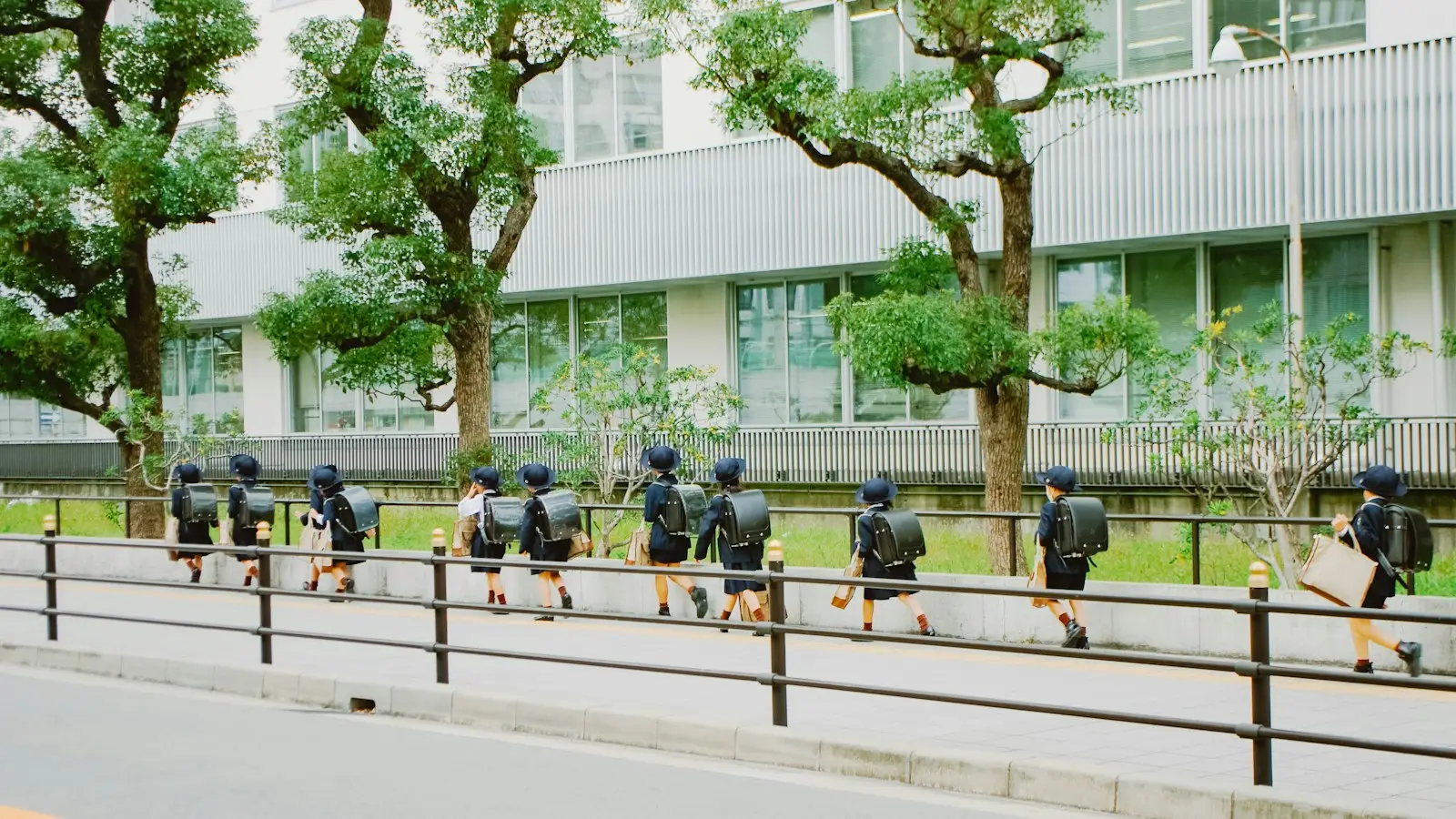
Where there is no bus, there is the train. Tokyo’s public transport is safe and reliable, and many international school students use it, especially where school bus service is not available, with older students often traveling alone. In Yun Sun’s experience, the school run by car is much less a part of family life in Tokyo than in many other cities, which makes the home-to-school journey worth planning with care rather than something to sort out after the move.
Yokohama Is Half an Hour Away
Nearby Yokohama, around half an hour from central Tokyo by train, adds further options to a Tokyo search, including the region’s German school and one of the oldest international schools in Asia. For a family whose preferred curriculum or type of school points that way, it belongs in the search alongside the Tokyo schools, and the same logic applies: settle the school, then look at where a workable journey to it begins.
Why the School Comes Before the Lease
Put the pieces together and the sequence follows. Schools are spread out; families cluster; central campuses are compact and suburban ones larger; bus service is limited; and a fixed address narrows the choice. A lease signed before the school is settled turns a wide search into a narrow one.
The calendar reinforces this. At Tokyo’s established international schools, applications for an August start often open the previous autumn, and decisions can run from late winter into the summer. Some schools admit on a rolling basis when places allow, and a few restrict when new students can join during the year. Applying early, and to more than one school, is the most reliable approach, and it also means the school decision can be made before the housing decision has to be.
If your employer’s timeline forces you to take housing first, a short-term arrangement in the center keeps the choice open while the school is settled. It is a more useful first lease than a long one in a neighborhood that turns out to be an hour from the school your child is admitted to.
A Practical Order of Operations
For a family planning the move, the order that tends to work looks like this:
- Decide the curriculum and the kind of school you want, and whether a compact central campus or a larger one further out suits your child’s age and interests.
- Apply early, and to more than one school, so the school decision does not wait on a single answer.
- Ask each school about its bus routes, where it runs them, and about the train journey from the neighborhoods you are considering.
- Once a place is confirmed, look for housing within an easy journey of the school, or along its route.
- Keep any housing taken before that point short term.
How a Bennett consultant helps
Our Tokyo education consultants know which schools sit within a reasonable journey of the neighborhoods families favor, which have room in which year groups, and how each school’s bus service and admissions cycle work. They recommend schools with your child in mind, liaise with admissions teams on your behalf, and give practical guidance on commute times and how to reach a school from a particular area, by bus, train or car, so the housing search can follow the school decision rather than lead it.
For Japanese families returning from abroad, the order of decisions has an extra step, because an international school carries consequences for a child of Japanese nationality that expatriate families do not face. Our post on returning to Japan with children explains that question in detail. And for a sense of how a family weighs all of this in practice, read our case study of a family relocating three children from Massachusetts to Japan.
Bennett International Education Consultancy works directly with hundreds of families each year across the globe. We support families by helping them make informed decisions about the best-fit schools for their children; with our guidance, they secure placement in preschools, private day schools, public/state schools, boarding schools, colleges and universities, including schools with particular programs, such as special needs support.