How to Confirm Your Dallas School District Before You Sign
In Dallas, the school district a home belongs to is decided by the address, not by the city on the listing. This post explains what an independent school district is, why a home with one city’s name can sit in a district named for another, and how to confirm the district and the attendance zone for a specific address before you sign anything.
Families arriving in Dallas tend to ask the questions they would ask anywhere: which neighborhood, which school. In North Texas the first question sits one level up. Public education is organized into independent school districts, more than 80 of them in the greater Dallas area and by some counts well over 100 depending on where you draw the metro’s edge, and the district an address falls in decides which public schools are open to your child.
Our post on the Dallas school landscape for 2026-27 covers how the districts fit alongside the private school corridor and the state’s new education savings accounts. This one stays on a single practical question: how do you find out, with confidence, which district and which campus a particular home is zoned to, and what should that do to the order of your search?
What an Independent School District Is
ISD stands for independent school district, and in Texas the word independent is literal. A district is separate from any city or county government. It must follow state directives, but it is free to implement them as it sees fit, so it sets its own policies, its own calendar and its own programs.
In practice that means curricular content, school calendars, transfer rules and even Kindergarten registration can differ from one district to the next, within a single urban area. A program your child relies on in one ISD, a particular language track, a gifted model or a special education setting, may not exist in the district next door. Even families moving from one Dallas-area district to another find this hard to work out.
For a relocating family, then, the district is not an administrative detail. It is the unit of choice.
Why a Dallas Address Can Belong to Another City’s District
District boundaries ignore city limits. The district map and the city map were drawn separately and they do not line up. Frisco ISD alone takes in homes in Frisco, McKinney, Plano, Little Elm, Prosper and The Colony. It crosses a county line as well, and at least one North Texas district reaches into three counties.
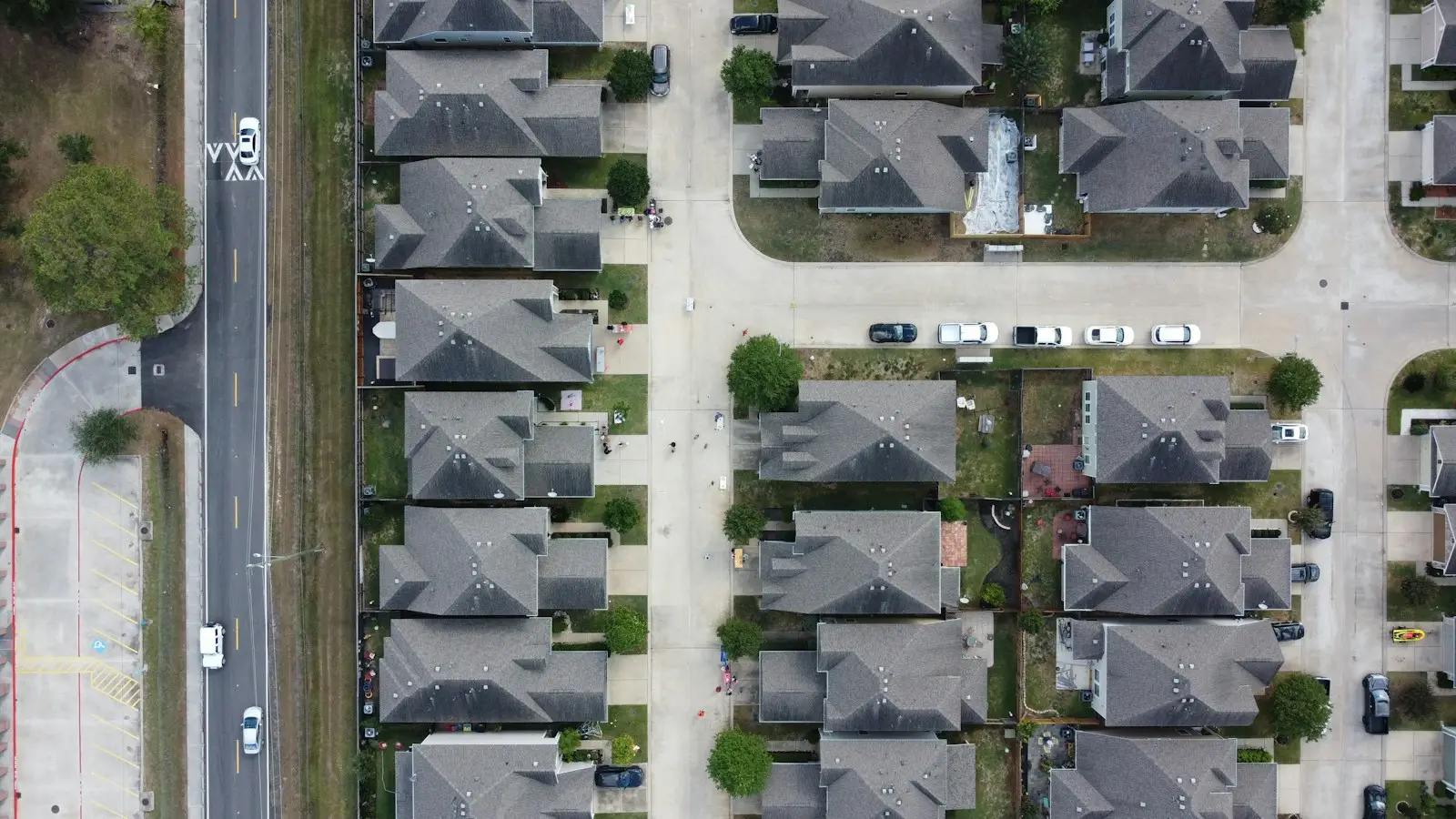
So a home with a Plano address may be in Frisco ISD, and a home with a Frisco address may be zoned to a different district entirely. Two houses on the same street can sit in different ISDs. The city name on a listing tells you very little; the district assignment for that specific address tells you nearly everything.
District, Attendance Zone, Campus
It helps to think in three layers.
The first is the district: which ISD the address is in. The second is the attendance zone. Inside a district, each campus serves its own zone, and every address is assigned to a specific elementary, middle and high school. The third is the campus itself, the school your child would actually attend.
In the public system there is always a local school assigned to your address, and enrollment runs all year, which is reassuring for a family arriving off-cycle. But the assignment is to a particular campus, not to the district as a whole. If a district drew your attention because of one school, the attendance zone matters as much as the district line.
Zones Move in a Growing Metro
The North Texas region added more than 200,000 residents in 2025, and the fast-growing districts on the edge of the metro are building schools as quickly as the subdivisions around them. As new campuses open, attendance zones are redrawn. A family can find that the elementary school they chose in the spring is not the one their address is zoned to by the following year.
That is not a reason to avoid a growing district. It is a reason to ask about planned rezoning before you commit, and to choose a district you would be content with across more than one of its campuses, rather than pinning the whole decision on a single school.
Growth has a second effect, which is traffic. Commute times across the metro have lengthened enough that they shape which districts are realistic, so the daily journey belongs in the decision from the start.
How to Check Before You Sign
The district is the authority on its own boundaries, and the listing is not. Before an offer or a lease, for the exact address:
- Ask the district to confirm which ISD the address is in and which elementary, middle and high school campuses it is zoned to for the coming school year.
- Ask whether any rezoning or new campus is planned that would affect that address.
- Ask for the district’s own calendar, transfer rules and Kindergarten registration requirements, since each district sets its own.
- If a specific program drew you to the district, confirm that it exists at the campus you are zoned to, or how a transfer within the district works.
- Ask what documents enrollment requires, so you have them ready on arrival.
Confirm the district for the exact address before you commit to a home; the city name on the listing is not enough.
District First, Then School, Then Home
The order most families use elsewhere, home first and school second, is the one that causes trouble here. Reverse it. Start with the districts that are realistic for your commute and that offer what your child needs. Then look at the specific campus your family would be zoned to. Only then look at homes inside that attendance zone.
Done in that order, the search gets shorter rather than longer, because whole stretches of the metro fall away early. The families who arrive happiest are usually the ones who settled the school and the commute together, before signing anything.
How a Bennett consultant helps
Our Dallas consultants explain how Texas ISDs work, confirm which district and campus an address is zoned to, compare the districts that are realistic for your commute, and guide enrollment when you arrive. Where a family is choosing between districts for a child with a specific need, they say plainly which ones to consider and why.
Our Dallas education consultants start with the district rather than the suburb, and with your child rather than a list of school names. For the wider picture, read what relocating families should understand first about Dallas schools, and for a sense of how a compressed Texas search can still work, our Miami to Austin case study.
Bennett International Education Consultancy works directly with hundreds of families each year across the globe. We support families by helping them make informed decisions about the best-fit schools for their children; with our guidance, they secure placement in preschools, private day schools, public/state schools, boarding schools, colleges and universities, including schools with particular programs, such as special needs support.