Moving to Toronto with Kids? 7 Questions About Toronto Schools, Answered

Toronto gives relocating families two publicly funded school systems and a strong independent sector, and the honest answer to almost every question about them is that it depends on the child. Bennett’s Toronto consultant Alison Randall explains what decides it.
Families arriving in Toronto from New York, London or Singapore usually bring an assumption with them: that a good school is one you pay for. In Toronto that assumption is often wrong, and knowing it early changes the neighborhood search, the budget and the timeline. It also raises a set of questions that are specific to Ontario, from what a Catholic school asks for at enrollment to why French immersion is harder to enter than most newcomers expect.
To answer them, we sat down with Alison Randall, an education consultant with Bennett International based in Toronto, who has taught in the city’s public and independent schools and moved her own four children through schools on three continents. Her answers, lightly edited for length, follow.
Do I pay for school in Toronto?
My short answer is that it depends on your needs, which is what I say to every family who comes into my service. Public schools, no, you do not need to pay. Independent and private schools, which are essentially the same thing, yes, you do. And the choice is always the client’s, based on your previous schooling, the curriculum you are looking for, the age of your children and your long-term goals.
The other piece, for relocating families, is the funding available from your corporate move, because the private schools in Toronto are very well populated by local Canadians and can be very pricey.
Toronto has both public and Catholic schools. What is the difference, and can we use either?
This is a system I always have to explain to clients coming to Toronto. In the province of Ontario we have a dual system of publicly funded schools. Every neighborhood you might live in has one public school and one Catholic school, both funded through the tax system, so you would have access to both.
The only difference at the elementary level is that if you want access to the Catholic schools, you have to show proof of Catholicism. Once you get to secondary school that changes, and you no longer need to show it. Beyond that, the only real difference is the layering of a faith-based piece on top of the Ontario curriculum. The base curriculum is the same in both systems; it is the faith element that gets layered on top.
Does our address decide our child’s school?
For public school, your address one hundred percent determines which school you are going to, and as I said, you would have access to a standard public school and a Catholic school. For private school, no, it does not. I would say it is almost the reverse: your school choice probably should dictate your address, because Toronto traffic is the thing.
When you are establishing yourself in a new city, you want your life to be manageable. And you want to consider the important role of local friendships for your children in an international move. Helping them land successfully, socially, is a huge piece of the puzzle.
Can our child go to school on a work permit?
Yes, children can definitely go to school on a work permit. When a family comes to the country as a family unit, to settle, you provide the paperwork for your move at immigration, and you leave with a stamp in your passport and a demonstration that you are moving here to stay. The schools here are very used to families moving to the country full time, so that is an easy transition: you show them the level you are coming in at, and you have access to school.
Independent schools are not as exacting about status, though of course they want to see that you are here for the long term and here with your family. In the public system they will definitely scrutinize it, and families typically go through a welcome center that is part of the public school system. They are very used to dealing with families from anywhere in the world, and to helping you through the process.
Should we put our child in French immersion?
Canadians ask this question too. It is a very common question for any family, especially at the elementary level. Ontario has French immersion, which is intense exposure to and education in the French language, rooted in our country’s dual-language history. But the programs are exceedingly competitive. Even local families have to apply and go into a lottery, and they do not know whether they will be accepted.
The challenge for relocating families is that the children must first be registered in the public school system before they can apply for French immersion, so I typically do not work with families who apply to it. We also have full French for families who can show that one parent comes from a Francophone background, but that is quite a unique case.
The other thing to consider is that there are very specific intake years. In some boards it is junior kindergarten, when the children are four and beginning school; in some it starts later, at Grade 1; and for what I would call French immersion light, with a little less French, students are taken in Grade 4.
When is a private school actually worth it?
The magic question. Always, it depends on the client. Private schools in Toronto are very expensive on the whole. You can find some that are more affordable, but the scale of what is offered is reflected in that price.
A private school, by the nature of the fees you are paying, gives you a much better facility and much more extensive after-school programs, and the ratio between teachers and students is much tighter. In a public school right now you might have 27 children to one teacher; in a private or independent school it might be 15 to one, and you might even get a teacher and an assistant in the classroom, even in a Grade 7 class. Sports facilities, arts facilities, extra teachers, and certainly more extensive support for students who need it, in a learning center, for example.
There is a lot you get, and it is a family’s decision how much they want to pay for it. Or perhaps the company is covering the fees, which is the best-case scenario.
We have found out we are moving to Toronto. Where do we start?
You start with me. You call me, we chat and get to know each other, and then we make a customized plan based on your needs, and only your needs, not somebody else’s. It is very different from a random ChatGPT search for the top schools in Toronto. I know the admissions teams at the different schools. I can look at your child’s previous schooling, the curriculum they are coming from and the reports they have, and understand your child’s individual interests and needs. From there we target three to five schools you might be interested in, and we work together to find the best solution.
We always give choices, because coming to the city, visiting the schools and meeting the admissions teams is vastly informative. I have seen families’ opinions change dramatically after visiting a school, and after seeing their child in that environment and what resonates for them. Sometimes you think you want something, and then you go there and realize it is not at all the feel you were looking for and it did not feel right for your family. And then I have seen families make a massive pivot.
Tell us about you. How did you get into this work, and what do you enjoy most about it?
I am a consummate learner. I have always been drawn to anything to do with education, and I keep going back to school myself. But I am also a traveler at heart. I have an app that tracks the countries and continents you have been to, and currently it says 46 countries and every continent, so I am definitely interested in international life. We also have four children, so clearly I love kids, and I have had the great benefit of moving around the world with my family. We were gone for about ten years: we moved to Belgium, where we decided to have our fourth child, then to Czechia, then to Dubai, and then home.
Along the way we were fortunate to be helped by school consultants, and I really never could have done it without them. I think I would have been a puddle of tears on the floor trying to figure it out, because sometimes it is very stressful. When you are moving to a country like Dubai, you do not have the slightest clue where to start. Having a school consultant who helped us narrow it down showed me the importance of having somebody who has your back and has the local knowledge.
And I love removing the stressful piece for families who, on that first intake call, feel like a deer in the headlights. Some people have a clear sense of what they want, but a lot of families find this piece overwhelming. I love taking that away, and when they settle on a plan and their child is ready to go to school, it is incredibly satisfying to see them at that point.
Talk It Through With Someone Who Knows Toronto’s Schools
Working out whether public, Catholic or independent is the right route for your child, and then finding the specific school, is the work our Toronto consultants do every week. For the longer version of this conversation, Alison’s 2023 webinar on schooling in Toronto is still worth thirty minutes.
Get in touch with a consultant who knows Toronto’s admissions teams, for an hour of clarity →
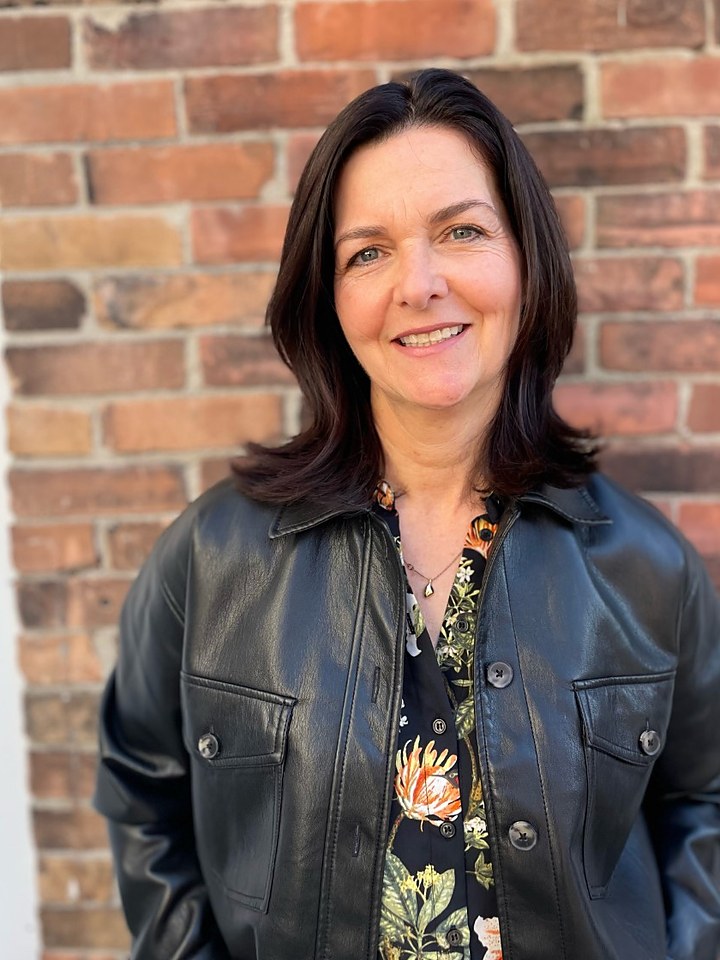
Alison Randall is an education consultant with Bennett International, based in Toronto. Canadian-born, she has taught in public and independent schools in Canada across every age group, including students with special education needs, and spent ten years abroad with her own four children, in Belgium, the Czech Republic and Dubai, before returning home to Toronto. She has visited 46 countries on every continent, and knows firsthand what it is to be helped by a school consultant in an unfamiliar city. Alison holds a degree in French from the University of Western Ontario and an M.A. in Child Study and Education from OISE at the University of Toronto, and has studied French, Italian and Spanish.
Bennett International Education Consultancy works directly with hundreds of families each year across the globe. We support families by helping them make informed decisions about the best-fit schools for their children; with our guidance, they secure placement in preschools, private day schools, public/state schools, boarding schools, colleges and universities, including schools with particular programs, such as special needs support.