Understanding Schools in Spain: An Interview with Education Consultant Leticia G. de la Rasilla
From the three types of school, to Spain’s co-official languages, from international schools to repatriation, Bennett’s Madrid-based consultant Leticia G. de la Resilla shares what families need to know when navigating Spain’s complex education landscape.
If you’re a family moving to Spain, you may be surprised by the fact that the education system varies from one part of the country to another. Spain has 17 regions, each with meaningful control over how education works within it. Add co-official languages in 6 of these regions, a distinctive semi-private school model, and a variety of international options, and it becomes clear why expert guidance can make all the difference.
We sat down with Leticia García de la Rasilla, one of Bennett International’s most experienced Europe-based consultants and a Global Team Lead, to talk through what families relocating to Spain need to understand. Leticia is based in Madrid and brings a rare depth of firsthand experience to her work. She began consulting nearly two decades ago and has also relocated with her family across multiple countries, including Mexico, Germany, Ireland, France, and Belgium, before repatriating to her native Spain. As a mother of four who had to figure out her children’s education all by herself as they moved from place to place, she understands the experience of the families she works with from the inside out.
In this conversation, Leticia explains Spain’s three school types, how language of instruction can shape school choice, what “international” really means when comparing schools, how repatriating families can navigate their return to home country, and what the path to accessing university looks like for students coming out of the Spanish system.
Watch the interview, and a full transcript follows below:
Tell us about yourself, your background, and how your own experience relocating across multiple countries shapes the way you work with families moving to Spain.
I have a degree in Business and a degree in Law, and I started my professional career in the international commerce and investment attraction sector, but I’ve always been passionate about education. At one point, due to a relocation, I had to change my professional path completely, and I became an education consultant. That was 19 years ago. Currently, I’m preparing my PhD in Education, doing research on Third Culture Kids.
What this means is that whenever I work with a family moving to Spain, I can really put myself in their shoes. I know what they’re going through because I’ve had to relocate to different countries, with and without children. So I really understand the stress they’re experiencing and, at the same time, I’m able to step back from that emotional side and be genuinely helpful to them.
Spain has a school system with some particularities that may differ from what most international families expect. Can you walk us through the main types of schools, including the concertado system, which is fairly unique to Spain?
Spain has three different types of schools. We have private schools, public schools, and then, in between, we have the semi-private schools called “concertado schools,” which are essentially private schools that receive a subsidy from the government. That subsidy could be larger or smaller.
One thing a family moving to Spain needs to understand is that Spain has 17 different regions, and education is one of the entities that’s decentralized. There’s a National Education Law that sets the general rules, but each department of education within those 17 regions is responsible for managing how education works in that particular region.
What that means in practice is that for public and semi-private schools, the rules differ from region to region. Regions may teach different subjects and have different time schedules and tuition fees. So it’s not the same to attend a public or semi-private school in one region as it is in another.
Language is a big consideration for families moving to Spain, and it’s not just about learning Spanish. Between Castilian, Catalan, Basque, and Galician, what do families need to understand about how language affects school choice?
In Spain, Spanish is the official language across all 17 regions, but in 6 of them, there’s another co-official language. That means that within their semi-private and public schools, those regions need to provide a certain number of hours of instruction in both languages: Spanish and the other co-official language.
But again, because education is managed by each region, they have some flexibility to set their own rules. Although in theory they should be teaching half the time in Spanish and half the time in the local language (plus English, if the school also teaches in English), the reality isn’t always exactly so. For international families who aren’t very familiar with Spain, this can come as a surprise.
It’s one of the most important things to understand, because it directly affects which regions and which schools will be the right fit for your child, depending on how long you’re staying and what language path makes sense for your family.
For families considering international schools in Spain, what should they know about the range of options, and how do the landscapes in Madrid and Barcelona compare?
Spain has a very wide variety of international schools spread across the country. In the larger cities, there’s naturally a wider selection.
But first, I think we need to understand what an international school actually is. In my opinion, a truly international school has three components. First, the school follows an international curriculum, whether that’s the International Baccalaureate, British, German, French, Italian, or another curriculum that isn’t the Spanish one. Second, the student body is mostly international, meaning the majority of students are non-Spanish. And third, it has a large number of teachers who aren’t Spanish.
By that definition, there aren’t that many purely international schools, but there are still plenty, and Madrid and Barcelona both have many of them. But then there’s a very interesting variety of schools that range from more international to less international, with all kinds of blends in between. You have schools with mostly Spanish students that follow an international curriculum, and schools that blend the Spanish curriculum with a British curriculum or the IB.
One thing I think is important is that an international family doesn’t only have to look for international schools. It really depends on the age of the children, how long they plan to stay in Spain, where they’re coming from, and of course their budget, because international schools are expensive, and the more international a school is, the more expensive it becomes. There’s a lot to choose from.
Spain has become known as one of Bennett’s areas of expertise for education needs. Bennett is working with more students these days who have Special Education Needs; what should families relocating to Spain with a child who has additional needs understand about the options there?
Spain has supports in place for students with special education needs, across the full spectrum, from mild to significant needs. So the provision exists.
But families need to understand that the language of instruction will be Spanish, and that’s the biggest challenge I’ve encountered when working with international families who have a child with additional needs. Most private and international schools will have a learning support department that can help with milder needs.
I want to reassure families that Spain is not a country where relocating with a child who has special education needs would be impossible. Far from it. The main consideration is simply the language of instruction, which in most cases will be Spanish. That’s something we work through carefully together, taking each child’s specific profile into account.
A lot of Spanish families who’ve been on international assignments eventually repatriate. What are the biggest challenges they face bringing their children back into the Spanish system, and how do you help them navigate that transition?
Repatriation is always a challenge. Depending on how long the family has been abroad, it can be quite challenging to return to their old life.
In terms of education, it depends on the age of the student. It’s not the same to return with a five-year-old as it is with a 15-year-old. The language of instruction where they were living matters too. If they were in a Spanish-speaking country, they’re probably able not just to speak but to read and write as if they’d never left. But the curriculum is something to consider. If we’re bringing back a high school student, they’ll need to face the exam we have at the end of high school, and they might have gaps in certain areas that require some extra support or tutoring.
That said, for a child who has kept up the Spanish language and grown with it, reintegrating into the Spanish curriculum is not impossible at all. I think the biggest challenge for a repatriating family is often the tuition fees. If their children have been in an English-speaking school, a British curriculum school, or a German school abroad, they may want to continue at an international school in their area. But they may not be able or willing to pay the tuition fees, and there’s usually no company behind them helping to cover that cost anymore.
For families thinking long-term about university, what should they understand about how the Spanish system connects to university admission?
These days, any student coming from the Spanish curriculum can enter university across the world. The equivalences work really well, so I don’t think that’s a problem at all.
To me, it’s more a matter of the language at the university. If a Spanish-speaking student coming from the Spanish curriculum is entering a US or UK university, that student needs to be very fluent in English to be able to follow the course. But the pathway into university itself is seamless.
What does it typically look like when a family engages you for support? Can you take us through that journey?
On our first conversation, I usually tell families that I’m here to help and that I’ll hold their hand throughout the entire process. And I can feel that after that first conversation, a lot of weight has been taken off their shoulders.
When a family isn’t excessively stressed about the schools, things go more smoothly. They’re able to have that open-mindedness I mentioned. They’re able to think things through thoroughly, not just going by a list they saw on the internet or the name of the best school that a friend or colleague mentioned, but really looking at what’s best for their child, their family, and how they envision their education path.
So along the way, I see the stress begin to fade, and typically we find a very good education solution for that particular student. Even when a family is moving next month and the schools are closed for the summer, just having someone tell you that everything is going to work out makes an enormous difference.
And on the question of timing: families often worry about arriving off-cycle, partway through the school year. International schools generally have year-round applications, provided there are spaces, though some very sought-after international schools can be overbooked, which makes arriving mid-year difficult. For public and semi-private schools, education in Spain is compulsory from ages six to 16, which means any child who arrives at any point and is a resident in Spain will have a school place. The consideration there is that the assigned school might be far away or might not be the strongest academic match, so mid-year moves are challenging. But I’ve seen wonderful outcomes even in the hardest cases. There’s a solution to almost everything.
What’s one piece of advice you’d give to a family that’s just learned they’re moving to Spain and hasn’t started the school search yet?
Start the school search as soon as possible. If you want to focus on public and semi-private schools, you will need to be on the ground and have a registered local address before you can enroll, but you can still begin your research. Make sure you’re going to live close to schools of interest, or in a region that aligns with your family’s requirements.
And I would also say: be flexible and open-minded. The majority of the time, things do turn out well. If you have that extra flexibility, everything will be okay.
Whether you’re relocating to Spain, repatriating to your home country, or a local family looking for a change, our consultants are here to walk this road with you.
Get in touch with a consultant who knows these schools first-hand, for an hour of clarity →
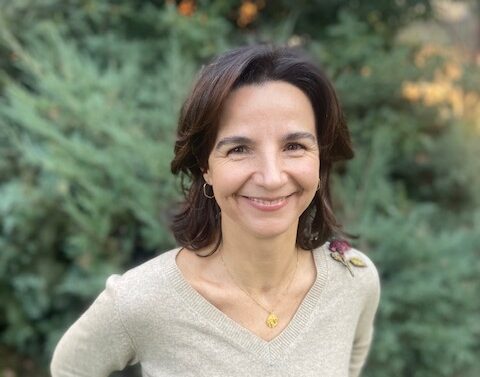
Leticia García de la Rasilla is based in Madrid and serves as Bennett International’s Client Services representative and a Global Team Lead, overseeing and supporting Bennett’s Europe-based consultants. She began working with Bennett in 2007 as an independent consultant based in Mexico, later relocating to Germany and eventually repatriating to her native Spain. She has also lived in Ireland, France, Belgium and Portugal. As a mother of four children who had to “figure it all out,” she brings deep empathy and firsthand understanding to the families she supports. Leticia holds undergraduate degrees in Business Administration and Law, along with a Master’s degree, and is currently pursuing a PhD in Education with a focus on third culture kids.
Bennett International Education Consultancy works directly with hundreds of families each year across the globe. We support families by helping them make informed decisions about the best-fit schools for their children; with our guidance, they secure placement in preschools, private day schools, public/state schools, boarding schools, colleges and universities, including schools with particular programs, such as special needs support.