How to Make a Happy Transition to a New Country: Tips for Families

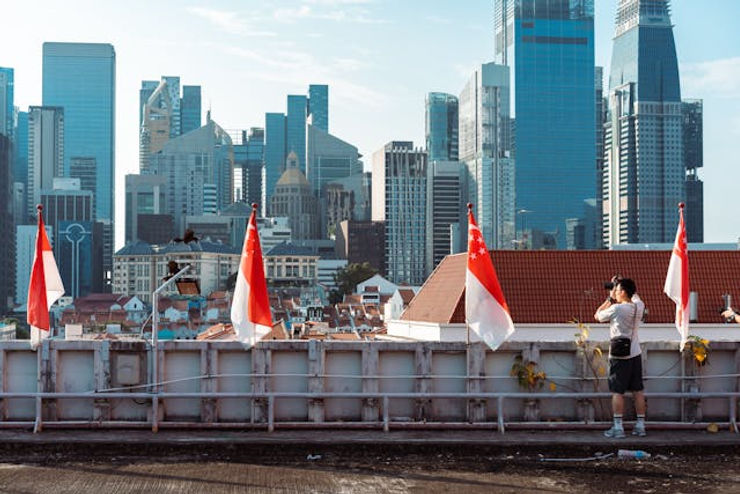
Photo: Hirmawan Susilo
Emma, a virtuoso consultant & quintessential TCK, offers some sound advice.
By the time I went off to university in the U.K., I had lived in and attended school in five countries spread across the globe. My father’s job meant that every few years, we would pack up our things and cross an ocean to make a new home.
While my father prepared to take on his new role and attended to all things work-related, my mother focused on making the transition for her young daughters as smooth as possible. As a result of this, and through working with families relocating abroad, I know that their children’s well-being is at the top of parents’ minds when facing such a move.
It is scary for a child to be told that they are moving across the world, far away from their friends and the life and routines that they are familiar and comfortable with. I remember regularly feeling as if my world had been turned upside down. Nothing seemed safe or permanent.
- To feel secure and confident during such a life-changing time, children need to feel as if they have some sort of control over their lives. Parents can help them by giving them as much information and preparation about the upcoming move as is developmentally appropriate, so that they do not feel as if they are being launched into something that is completely unknown. Whatever the age of the child, they need to understand, the best they can, how the assignment will impact their life and how their life will ‘look’ over the next few years.
- Parents should not spring news of an upcoming move onto their unsuspecting child. However, given that a very young child does not have the same concept of time as an older child, parents of toddlers might want to give less notice of the move than, say, parents of a teenager.
- If possible, children should have some idea of how long they will live in their new country, have time to learn something about it and, very importantly, they should have an opportunity to say good bye to their friends. My parents would have a farewell party for my sister and me before we left, as a way to bring closure to our time in a particular country, and to officially end our time there. These days, the internet provides great ways to stay in touch with family and special friends at home. In the old days, I was once even a pen pal to the class that I had left behind, which kept me feeling connected to them.
- In learning about their new country, parents should involve their children as much as they feel is appropriate. Families can do research together on the internet, connect with people and their children in the same situation, who are already living in the new destination and, in a best-case scenario, visit their new home and school ahead of the move. Seeing their new home, checking out the surrounding area, the activities they can get involved in and the adventures that they can have as a family can even make children excited about the move. Parents should also give their children some choices, if possible—how would they like to decorate their bedroom, where would they like to explore during the weekend, which after school clubs would they like to join, etc.
- While highlighting things that are familiar in their new home is important and can give a child some comfort, to get the most out of this unique opportunity, it is vital to encourage children to go in with an open mind, to embrace and respect what is different, and to learn from it, too. Making sure that children have local friends, and not just the expatriates that they might go to school with, can really give them invaluable insight into a new culture.
Of course, no matter how much parents prepare their children, there will inevitably be an adjustment period for the family. But the experience of living in another country is something that children carry with them for their whole lives and shapes the adult they become, the choices they make and how they interact with the world.
They learn how others live, how they think, how they communicate, their customs, what they eat, and possibly even another language. It gives them confidence and empathy and develops tolerance and open mindedness. While transitions may be difficult at the time, parents should be assured that their children’s lives will be enriched by such a unique opportunity.
What good transition support looks like in a school
Families often ask how much difference the school itself makes to settling in. The honest answer is a great deal, and it varies more than you would expect between schools that look similar on paper.
The schools that do this well tend to have someone whose actual job is transitions rather than it being an add-on, a buddy or ambassador system that pairs a new child with a current one, and a plan for arrivals who join partway through the year rather than in September. They also think about parents, because a parent who has found a community settles a child faster than any program does.
Questions worth asking before you choose
Ask who is responsible for new families, and what happens in the first fortnight specifically. Ask how many children joined mid-year last year, because a school that rarely takes mid-year arrivals will be less practised at it. Ask what language support looks like day to day if English is new to your child, and ask what happens after the first term, when the initial attention naturally fades but a child may only then be finding it hard.
The answers tell you as much about a school’s culture as its results do.
How a Bennett consultant helps
We visit schools and we ask these questions for a living, so we can tell you which ones genuinely support arriving children rather than simply saying they do. We work with relocating families and with the mobility teams moving them.
Get in touch with a consultant who visits these schools, for an hour of clarity →

Emma Hoffman was born in New Zealand and has been living in the United States since 1996. A true ‘Third Culture Kid,” she grew up and was educated in six countries, including Hong Kong, Western Samoa, and Gibraltar. Emma therefore has first-hand experience of, and is particularly sensitive to, the education and cultural challenges faced by children and families who are moving internationally. After graduating from King’s College, University of London, with a degree in law, Emma followed her true passion and earned a Postgraduate Certificate in Education from the University of London, specializing in elementary education. She has dedicated the past twenty years to educating children in a number of capacities and has taught in public and private schools in the U.K. and the U.S. She currently tutors children across grade levels and subjects, also prepares students for U.S. standardized tests, including the S.S.A.T. and the S.A.T. Emma has a particular ardor and knack for getting kids to discover themselves through the writing of epic personal statements.
Bennett International Education Consultancy works directly with hundreds of families each year across the globe. We support families by helping them make informed decisions about the best-fit schools for their children; with our guidance and connections, they secure placement in preschools, private day schools, public/state schools, boarding schools, colleges and universities, including schools with particular programs, such as special needs support.