Finding the Right School in the San Francisco Bay Area: An Interview with Education Consultant Shahla Yaghoubi

Five distinct regions, world-class public schools, and one of the strongest landscapes in the country for neurodivergent learners. Bennett’s Bay Area consultant Shahla Yaghoubi shares what more than 20 years of school placement has taught her.
If you’re a family moving to the San Francisco Bay Area (or a local family considering a change), you’re stepping into one of the most varied and opportunity-rich education landscapes in the United States. You’re also stepping into one of the most expensive housing markets in the country, and the two are deeply connected. Where you live, what you can afford, and where your child goes to school are decisions that don’t happen in isolation here.
We sat down with Shahla Yaghoubi, one of Bennett International’s most experienced Bay Area education consultants, to talk through what families need to consider. Shahla has spent more than 20 years helping families find best-fit schools across San Francisco, the Peninsula, the South Bay, the East Bay, and Marin County. She lives on the Peninsula, raised her own children in Bay Area schools, and has firsthand experience navigating the system as a parent of a neurodivergent child. That combination of professional expertise and personal understanding shapes everything about how she works with families. In this conversation, Shahla shares why the Bay Area is so much more than San Francisco proper, how public schools here surprise families from around the world, why this region is unmatched for children with learning differences, and what her process looks like from that first phone call through to enrollment.
The Bay Area is a big region. Can you walk us through the different areas and what makes each one distinct?
The Bay Area is larger than meets the eye and is incredibly a diverse region – not easy to capture in a nutshell. While geographically compact, it offers at least five very distinct “feels”.
You have San Francisco proper, which is urban, hyper-dense, fast paced and vibrant. Then there’s the Peninsula, stretching south from the city, known to be the corporate powerhouse and elite suburban corridor with its epicenter of global Venture Capital (Sand Hill Road) and tech giants such as Meta & Oracle. It is defined by its manicured corporate campuses, elite universities (Stanford), and tech-driven wealth; it is highly sought after, sophisticated, intelligent while still family-oriented. The South Bay is anchored by Silicon Valley and tends to be more suburban and innovation driven. The East Bay offers a broader mix with its suburban valleys offering more space. It is known as the industrial heart of the Bay, with cities such as Oakland and Berkeley showcasing racially, socioeconomically and culturally the most diverse subregion of the Bay Area. And to the northeast, Marin feels almost like a world apart with its less dense, homogenous, nature-centric, affluent and yet environmentally conscious culture, offering endless rolling hills. These could honestly be five different and separate states. They each have their own culture, their own temperament, their own feel, and even their own climate 😉
For families, the starting point is what I often call a triangle: where you work, where you want to live, and where your child will go to school. The goal is to keep those three points in balance, which may vary for each family. For some, a longer commute is perfectly acceptable; for others, proximity is essential. And for families working remotely, the priority may shift toward a very specific type of community.
One constant in the Bay Area is that housing and school selection are deeply interconnected. Unlike in some regions where families choose a school first and everything else follows around that, here the process is more fluid. Families often need to balance where they can realistically secure housing with the school options available in that area.
When the higher cost of living is added to this mix of considerations, many families find themselves exploring neighborhoods they hadn’t initially considered. The good news is that excellent private school options and often solid public school districts exist across much of the region. So, flexibility can often lead to unexpectedly great outcomes.
When families first come to you, are they asking the right questions, or do you find yourself redirecting?
It’s almost always the latter. While some families come in with a clear vision, most don’t know what they don’t know, and that’s exactly where we come in as consultants.
Families are typically open and curious, but in about 90% of cases, we’re the ones guiding the conversation. We ask the questions that help uncover what really matters, based on our understanding of both the education landscape and the region itself. These are often the most rewarding engagements.
The families know what their values are, their child’s best learning styles and what they wish for their student’s future education success. They own that personal piece 100%. We support them to achieve the most optimal options that come as close to (if not completely meet) their vision for their child’s success. We achieve this by asking relevant and insightful questions, learning about the family’s values and priorities, and help translate them into informed choices within a completely new environment. We’ll explore questions like: How familiar are you with the area? What’s your commute tolerance or perhaps you have the option to work remotely? What is your budget? Are you considering public or private schools – and why? Is this a long-term move, or are you planning to repatriate in a few years? Do you have an existing community you wish to stay close to? What is your timeline? And so on…
I often tell families that if they don’t know the landscape, I act as their map – literally! My role is to help them understand what they’re choosing – the trade-offs, the opportunities, and the implications of each decision. There are always multiple sides to consider, and over time, we’re essentially helping families to build a mental framework that allows them to evaluate what matters most for their family and move forward with clarity and confidence, much like a spreadsheet where values of importance are being checked off.
Public schools in the Bay Area seem to surprise a lot of families. Can you tell us about that?
Many families are genuinely surprised by the quality of public schools in the Bay Area. California is sadly reputed to typically have low-quality public schools. This is not necessarily the case for the Bay Area.
The reality is that Bay Area public school districts can offer tremendous value. While it’s true that not all public school districts are excellent, there are exceptional pockets across the region, and families who take the time to explore them thoughtfully and with an open mind, often feel very confident in choosing that path.
We often work with families coming from regions where private schools are considered the only strong option. So when they see the caliber of some public schools here – academically, socially, and emotionally – it is the unexpected. A common reaction is: “Why would we pay for private when the local public school is this strong?”
That realization can shift priorities. For some families, it means they’re able to reallocate resources, often toward housing (which can be quite expensive here) or other aspects of their transition.
You’re also deeply experienced in working with neurodivergent learners. What does the Bay Area offer for families with children who have learning differences?
Welcome to the San Francisco Bay Area, where neurodivergency is met with positivity, an open mind, and choices. Students who learn differently are among the most fortunate with infinite opportunities and learning modalities. In fact, a parent can be overwhelmed with the number of choices rather than overwhelmed due to lack of. The San Francisco Bay Area is where you want to be if you are an atypical learner – and I say this with full confidence!
With over 30+ schools across the region specifically designed to support the creative mind that doesn’t fit exactly into the traditional school model – the Bay Area offers exceptional options: from one-to-one programs to small, specialized schools; in-person and online models; and environments focused on building confidence, independence, and self-advocacy. You’ll find programs tailored to ADHD, autism, dyslexia, and a wide range of learning profiles, including therapeutic settings.
One of the things that makes this region unique is the level of collaboration and shared expertise among schools. For example, groups like the Inclusive Schools Group (ISG) bring together K – 12 schools dedicated to supporting students who learn differently. That kind of ecosystem is not something you see in most places.
We often work with families relocating from highly rigorous academic systems – places like Singapore, the UK, Hong Kong, and Japan – where a child’s learning differences can make the experience of learning particularly challenging. For those families, the Bay Area can feel like a reset. I often reassure them that they are coming to a place where their child can be understood, met where their child is at cognitively, be supported, and truly thrive. It truly speaks to a struggling parent’s heart when customizing their neurodivergent child’s education – usually alone and in isolation.
Public schools also play an important role in these cases. They are required to provide services and support for neurodivergent learners within their districts. While accessing those services can require advising and guidance, there is a clear framework in place, and we support families in navigating that process every step of the way.
This is truly one of the defining strengths of the Bay Area’s education landscape.
Walk us through your process with a family, from that first conversation through to placement.
Most families come to us in a moment of transition. They’re excited, often moving for a career advancement, but also overwhelmed. There’s a point where it all catches up: “We’re moving… but what about X, Y & Z?” which typically relates to all the family elements. So they arrive feeling, understandably, a bit disheveled and scattered.
My first role is to bring calm and focus. To let them know: you’re here, you’re in good hands, and there’s a clear path forward. That sense of trust – grounded in experience but delivered with empathy – really shifts how families begin to approach the process. We’re not looking at the mountain to find the peak; rather, we’re mapping the steps to get to the peak.
The initial intake is incredibly important. It’s where I get to understand not just the logistics but the family itself: their values, their concerns, their level of confidence, and whether there are specific learning needs to consider and what their expectation is from our engagement. From there, I translate what I’ve heard into a set of school options that align with both the family’s requirements and the realities of the Bay Area.
I almost always include a few thoughtful alternatives as well – options the family may not have known to consider, not to distract but to expand their perspective. At that point, I’ve really stepped into their shoes and am thinking alongside them.
Before moving too far, I pause for a quick confirmation step. I summarize what I’ve heard and ask: Did I get this right? It’s simple, but it ensures alignment and builds trust.
From there, I deliver a curated set of recommendations and give families time to absorb and reflect, recognizing that timelines are often tight. Together, we narrow the list of options and then move into the area visit phase – should the family be lucky enough to have the time to make an area visit prior to their big move. I coordinate schedules, guide them through school visits, and make sure they’re seeing what truly matters in order to make an informed decision.
And throughout, I stay closely connected. I often tell families: text me while you’re visiting. Share what you’re seeing and feeling in real time. I’m here to help interpret and guide. I’ve even met families for coffee after visits – those moments of real-time connections can make a meaningful difference. At its core, the process is both structured and deeply personal. It’s about helping families move from uncertainty to clarity, step by step.
Late applications seem like a big factor in this market. How does that play out?
Late applications are a significant factor in the Bay Area – and they rarely follow a neat, predictable timeline.
Families don’t typically come to us in neat and predictable timelines that coincide with application cycles. More often, they come at unconventional times, mid-year or in the spring. And in this market, schools aren’t actively courting applicants. Demand is simply too high and if anything, it’s the families who are doing the courting.
This is where our role becomes especially valuable. The relationships I’ve built with admissions offices over many years matter. When I reach out and say, “I have a family relocating – can you consider a conversation at this late juncture?” – that call is received with trust.
It’s very much a two-way street. Schools know that the families we introduce have been thoughtfully vetted and are a strong fit for their school. At the same time, we prepare families from the outset: if they’re entering outside the traditional cycle, flexibility is essential. That may mean considering a Plan B or even a Plan C.
In some cases, an interim placement is the right strategy while waiting for space to open at a preferred school. And occasionally, families make the decision to delay their move altogether if the right placement isn’t available. That, too, can be the right choice. Ultimately, success in this market comes down to preparation, relationships, and a willingness to stay flexible.
What’s one piece of advice you’d give to a family that’s just beginning the school search in the Bay Area?
Be patient and stay grounded.
The Bay Area offers an incredible range of options, which can feel overwhelming at first. But the reality is, there are many strong and viable paths. This is a region that truly caters to different learning styles, family values, and education philosophies.
Trust your instincts. Choose what feels right for your family, not just what looks good on paper.
And most importantly, give the process the time it needs. In the Bay Area, you’re often choosing between good and better – not right and wrong. The right fit is out there, and with a thoughtful approach and our guidance, families typically will find their most optimal choices.
If you are planning around this year’s dates, our update on San Francisco school admissions for 2027-28 sets out the current calendar and where the district’s assignment policy stands.
If you have questions about the education landscape in the Bay Area, or you’d like to talk through your child’s needs with someone with personal relationships with Admissions departments, who understands the culture, the geography, and the best academic options available to you, we’re here. Get in touch with us for a conversation about how we can help your family.
Start a conversation with our San Francisco team →
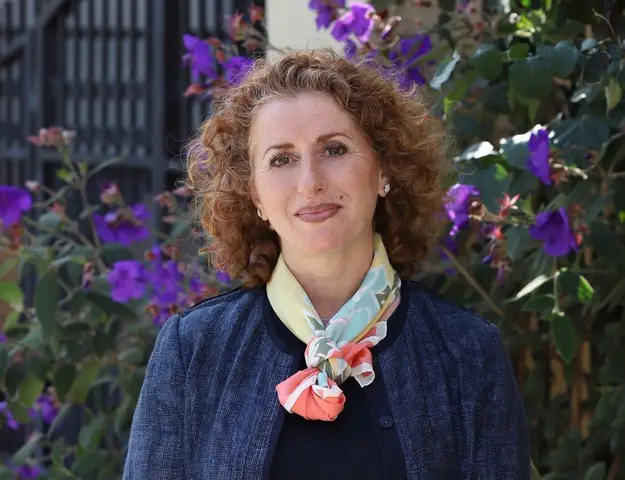
Shahla Yaghoubi specializes in working with families relocating to Northern California, most frequently to the San Francisco Bay Area. A seasoned Independent Educational Consultant who has been supporting families with their schooling needs since 2012, she knows the public and private school landscape intimately and has helped hundreds of families find the right-fit school for their children. She is much appreciated for her competence and her reassuring nature! Prior to becoming an independent education consultant, Shahla worked in the tech start-up and Fortune 500 industry in Silicon Valley in the field of Corporate and Sales Finance, and she holds an M.B.A/M.I.A. from Columbia University. In 2002, Shahla branched out and completed her ESL/EFL certificates and began working with adult language learners in the greater Bay Area. She has traveled throughout Europe and to Iran, Turkey, Oman and the UAE; she is fluent in Farsi and conversant in French.
Bennett International Education Consultancy works directly with hundreds of families each year across the globe. We support families by helping them make informed decisions about the best-fit schools for their children; with our guidance, they secure placement in preschools, private day schools, public/state schools, boarding schools, colleges and universities, including schools with particular programs, such as special needs support.