Starting a School Search in Hong Kong: Debentures, Timing, and Finding the Right Fit

Hong Kong offers relocating families an unusually wide choice of schools — and an unusually complex set of rules for getting into them. Bennett’s Hong Kong-based consultant, Yun Sun, explains debentures and capital levies, local versus international, admissions timing, and how families can find the right fit.
Families arriving in Hong Kong find one of the world’s densest concentrations of schools: government and aided schools, Direct Subsidy Scheme schools, local private schools, and a large international sector — each with its own curriculum, medium of instruction, culture and admissions process.
They also encounter a school funding structure that exists almost nowhere else, built around debentures, capital levies and corporate nomination rights, and an application cycle that can run close to a full year.
Yun Sun has lived in Hong Kong for two decades and has spent more than ten years guiding relocating families through that landscape. We asked her what families should understand before they begin a school search.
Tell us about yourself, your background, and the families you work with in Hong Kong.
Growing up in China, I went to college in the U.S. After graduate school, I worked for a management consulting company for many years. My family and I moved to Hong Kong through corporate relocation 20 years ago. We had two toddlers at the time. International schools had a fair number of breaks each year, which allowed us to bring the children to explore the world. During school time, I became more interested and involved in school affairs. I also volunteered for college admissions for my alma mater in the U.S.
Joining Bennett gave me opportunities to help many families who were going through a very similar relocation process as we did. The consultant and the mother in me and my cross-culture life experience made it very natural for me to relate to families and their children from all corners of the world and backgrounds.
What also makes the work stimulating is that each family is unique. I am presented with different sets of situations and challenges each time. Many clients were understandably stressed in the beginning. At the end of each case, it is very rewarding to feel the sense of relief and satisfaction in the family.
Paint us a picture of the Hong Kong education landscape. What makes it different from other cities families might be relocating from?
Although Hong Kong is not big, it is a highly populated city. While having deep roots in Chinese culture and education philosophy, the city also had British and religious influences from the past. As a result, its local system, public or private, already offers a great number of different types of schools. At the same time, Hong Kong is a very diverse international hub of the world. Both local and overseas families have a great variety of private and international schools to choose from. From public to private to international schools, there is a complex matrix of curriculum, language, school culture, religion, and education ethos, to name a few aspects that differentiate one school from another. You then add facilities, school resources, and tuition fees, etc. There is not a cookie-cutter solution to any family.
Also, the Hong Kong education landscape is never static. It witnessed frequent changes associated with waves of demographic shifts that were very sensitive to the global economy and geopolitics.
Hong Kong has a school funding structure that surprises almost every family arriving from abroad, particularly debentures, capital levies, and corporate nomination rights. Can you explain how that works and what families and employers should understand before they begin a search?
These are vehicles for raising capital by schools as part of school fees. Capital levy, or building fee, is usually mandatory, paid annually on top of tuition. Debentures or nomination rights vary a lot by school in terms of type and amount. Some are mandatory; most are optional. The optional ones often have impacts on admissions priority. Some schools take corporate debentures only, some also family ones. There may be primary or secondary markets for them. But some schools only honor existing debentures.
Due to overwhelming demand for some schools, debenture is often perceived as the only way to get a child ahead of others for a potential open space.
No matter if it is refundable or not, the initial lump sum of a debenture can be overwhelming, even for a company.
However, I’d say debenture is less scary than it sounds like. The majority of the students go through the international school system without it. For a family or company to do the initial research, visit school websites. Or our consultants can help you decipher. If it is a VVIP employee, the relocation team should find out whether the company has available corporate debentures and whether the employee is eligible to be nominated.
I’d add, however, that debentures, no matter how powerful they seem, don’t provide guarantees on admissions.
Beyond the international schools, Hong Kong has a substantial local system with its own subsidy structures. How should a family think about the local versus international question, and what role does the medium of instruction play in that decision?
Yes, local systems include government and aided schools that are funded by the government. The curriculum is recommended by the education bureau. There are also local private schools including Direct Subsidy Schools (DSS). The private schools may or may not offer non-local curriculum. The medium of instruction could be Cantonese, Mandarin, or English, or a mix of them. Government also offers an Initiation Program for newly arrived Mainland Chinese and non-Chinese speaking students to adapt into local system, culturally and academically.
When choosing between local and international schools, one needs to consider more than medium of instruction, curriculum, and costs. I can’t emphasize enough the importance of school culture and education ethos fitness. An English school that offers IB program may feel very Chinese due to the way it is run and how students interact with teachers and with each other. The admissions process is also very different between public, private, and international schools.
Hong Kong is known for competitive admissions and long waiting lists. What’s the realistic timeline for a family relocating here, and what are the options for a family arriving at short notice or mid-year?
A few schools accept applications years in advance while most others open their application systems in the summer a year ahead. For the majority of our clients, it is ideal to start the process as soon as the system opens. By Christmas time, a number of schools may have already stopped accepting new applications, dramatically reducing the number of options.
Having said that, for mid-year or last-minute arrivers, there are still likely to be options in almost every curriculum. I’d say that the family will need to be flexible about transitional schools or delay the family’s move for a bit. Neither is ideal, but feasible and actually can end up with good results.
Where a family lives in Hong Kong and where their children go to school are closely connected. How do you help families think through the geography, from Hong Kong Island to Kowloon to the New Territories and the outlying islands?
I am a map person. If the clients are not familiar with Hong Kong’s geography, I usually share a map marked with relevant school locations on our call. I am not a real estate expert, but I have some knowledge on commuting options and subculture of general areas. In most cases, my clients place school fitness on the top of their decision list. Parents are usually willing to live close to the school and commute to work if a best-fit school is far from work.
For families relocating to Hong Kong with a child who has additional learning needs, what should they understand about the support available and how to find the right fit?
Support for special education needs is certainly available in Hong Kong, within both local and international schools. We look at this in much more detail in the second part of this conversation. However, the availability and fitness of the supports need very careful investigation. Families from other countries such as the U.S. may be used to readily available support system in schools and not realize the importance of early disclosure and professional consultation before school search begins in Hong Kong. Bennett consultants always start from having a deep understanding of the student and his or her needs. We have a team of SEN specialists who play this critical role and collaborate with local consultants like me to identify the right school and programs.
For families thinking long-term about university, what pathways do Hong Kong students typically follow, and what should parents understand about how the different curricula here connect to universities around the world?
Hong Kong has a number of world-class universities, so they are popular options for high schoolers, especially local students. They have been gaining popularity among international school students as well in recent years. The rest of the students aim for UK, US, Canada, Australia, Europe, Singapore, Mainland China, and Japan. There is some correlation with curriculum. American schools have more students to the US than the UK, for example. But one IB school could have more graduates attend UK universities while another more U.S. So, I think that school culture as well as curriculum are key factors in most cases. Peer influence and the college counselor program at the high school also play important roles.
What’s one piece of advice you’d give to a family that’s just learned they’re moving to Hong Kong and hasn’t started the school search yet?
Based on the family background, the nature of the move (immigration, short term or long-term assignment or permanent move) and the long-term education goal for the students, the family should have a preliminary idea what type of schools are best suited for the students.
Next, it depends on the date of relocation. If you have a long lead time to the start of the new school, then do some research on your own and familiarize yourself with the city and some school options. However, to have a more comprehensive analysis of options and procedures, OR if you have very limited time, OR you feel overwhelmed by the relocation, I’d advise you to seek professional help as early as possible. Application cycle, which takes almost a year, can seem long, but you may have a narrow window to identify and select the right set of schools. There is little chance for trial and error.
And if possible, budget in time for school visits early in the process.
If you’re preparing a move to Hong Kong and would like to talk through your options with someone who knows the city and its schools from the inside, we’re here to help.
Get in touch with a consultant who knows Hong Kong schools, for an hour of clarity →
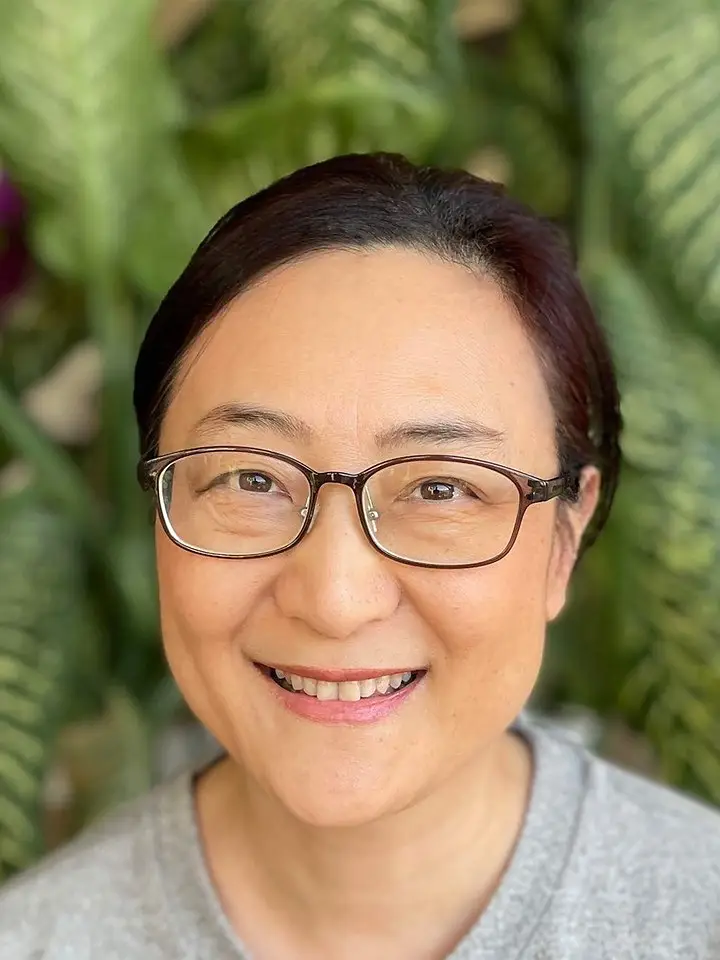
Yun Sun is a Hong Kong-based education consultant with Bennett International and Manager of Client Relations for Asia Pacific. For over a decade she has supported families relocating to Hong Kong, Mainland China, Japan, South Korea, Taiwan and other destinations across Asia. Yun grew up in Beijing and attended Peking University, before earning a B.A. in Biochemistry and Economics from Wellesley College and an M.B.A. from MIT Sloan School of Management. Before joining Bennett she worked as a management consultant at Booz Allen Hamilton in New York, later becoming a human resources specialist after relocating to Hong Kong, where she has now lived for twenty years. She is fluent in Mandarin and English, and conversant in French.
Bennett International Education Consultancy works directly with hundreds of families each year across the globe. We support families by helping them make informed decisions about the best-fit schools for their children; with our guidance, they secure placement in preschools, private day schools, public/state schools, boarding schools, colleges and universities, including schools with particular programs, such as special needs support.