Special Education Needs in Hong Kong: An Interview with Education Consultants Yun Sun & Jane Thompson

Support for children with special education needs exists in Hong Kong across both the public and private sectors. The work is in knowing where to look, what to ask, and why full disclosure matters more than families expect.
Hong Kong offers a genuinely wide range of schooling, but for a family arriving with a child who has special education needs, the path is rarely obvious. Support is spread across the public system, international schools, dedicated special schools, and independent practitioners, and no single option covers every situation.
In the second part of our conversation with Yun Sun, a Hong Kong-based education consultant with Bennett International and Manager of Client Relations for Asia Pacific, and Jane Krill Thompson, a specialist on Bennett’s Special Education Needs team, we look at what families should understand about SEN provision in the city. Yun’s first interview covered debentures, timing, and the school search more broadly.
For a family relocating to Hong Kong with a child who has special education needs, what’s the first thing they should understand about support options here?
The first thing the family should understand is that there may not be a straightforward option for a child new to Hong Kong with special education needs.
The good news is that between the public system and the private sector, meaning schools, specialized institutions and practitioners, a child with special education needs should be able to find the right support.
However, parents need to cast a wide net. Careful vetting and flexibility are critical. There are many factors to consider: public versus private, including international schools; general versus special schools; language; curriculum; the level and fitness of supports; availability; affordability; location; supplemental services, and more.
In short, parents should start early and be ready to investigate multiple options, or a combination of programs.
How do Hong Kong’s international schools approach special education needs, and how can families tell a well-resourced learning support program from one that exists mostly on paper?
Almost every international school has a learning support team that offers basic language support, such as ESL or EAL, and can be a resource for very mild cases of special needs. However, only a small number of schools offer more systematic support for mild and moderate SEN needs.
These schools could have a tiered approach. Some host a separate division for SEN students, who have some interaction with the rest of the school. Others place SEN students in full inclusion, which means they stay with their peers in general education classes. There are also separate special schools that serve students with a higher level of need.
Parents should contact the learning support or student support team of the target school, or work with a SEN consultant who has the in-depth knowledge and the skills to help vet a program.
What does the public Hong Kong system offer for students with additional needs, and is that a realistic option for relocating or expat families?
The Hong Kong Government adopts a dual-track mode in providing special education. The Education Bureau (EDB) will, subject to the assessment and recommendations of specialists and the consent of parents, refer students with more severe or multiple disabilities to aided special schools for intensive support services. Currently Hong Kong has 62 such schools, some with a boarding option. Meanwhile, the EDB implements the Integrated Education Policy, under which other students with special education needs attend general schools.
Deciding whether a SEN support program in the public system is realistic for a relocating or expat family is similar to judging any local school’s fitness for a relocating family, which we discussed in the first part of this conversation. Cost, language, curriculum, student demographics and school culture should all be weighed. Parents should also bear in mind that a student with SEN may require additional time to adjust to a new environment and program.
How does Hong Kong’s multilingual environment affect children with learning differences?
Language is absolutely an important consideration. Both the official language of instruction and the playground languages are very important factors.
Socially blending in and making friends quickly is important to any new student, and this can be more challenging for a student with special needs. If a student has a learning difference, it is especially critical for them to be immersed in a familiar language to maximize effective learning. While it varies by school in the local system, the majority of SEN support programs within the international schools in Hong Kong are in English.
What questions should a family ask a school directly to understand whether their child’s needs would genuinely be met?
There is no standard list of questions. We always work with our client families to create a set of questions relevant to their child’s specific situation, and the more specific the questions are, the better the information. Here are some examples:
- What level of special learning needs can your school support?
- Based on my child’s learner profile, how much participation will my child have in the general education program with neurotypical students?
- What will a typical day look like for my child?
- What are the class sizes and adult to child ratios?
- How are students grouped in the classroom, by age or by ability level?
- What services and staff are available on site, such as related therapies, learning support assistants, counseling or social skills coaching? Are these included in the tuition or are they an extra cost?
- How are placement, grade and classroom determinations made?
- What steps does the school take to address learning differences in the classroom?
- If my child needs extra social communication or emotional support, how is this provided?
- How are disruptive behaviors in the classroom addressed?
- How does the school communicate with parents when a child is struggling or has had a difficult day?
- What is the process for individualized learning plans, and how are these implemented, monitored and shared with the family?
- Our family is coming from a different environment. How do you help with integration into the school community?
- Is it possible to talk with a current parent at the school who has a child with special learning needs?
What’s one piece of advice you’d give to a family moving to Hong Kong with a child who has additional learning needs?
We believe that disclosure and full transparency are the most important of all. Be honest with targeted schools and with your education consultant. Without the most updated and accurate information, such as diagnoses, past learning plans and program reports, schools can’t make the right assessment of their ability to provide appropriate support for your child. If a school finds out that important information was undisclosed during admissions, the family may lose the school’s trust, which can even affect other siblings’ applications.
A SEN student admitted to a school without the right level of support, or no support at all, because of a lack of accurate background information is the person hurt most by it, along with their family. Everyone involved in the admissions process is eager to make the right match for a student. Transparency reduces unnecessary detours and saves time.
Disclosure includes having all the relevant documents ready as early as possible. Even if a child is not officially diagnosed, or if parents have only recently started to notice some learning challenges, sharing those concerns with schools and with their education consultant is important. It is understandable that parents are protective of their child and fear rejection on their behalf, and some may take a chance that once the child is admitted, the school will find a way to support them. A school may do its best, but if it doesn’t have the requisite resources in place, it may not be able to support a child adequately. We have worked with families who were told by a school, mid-year, that it could no longer appropriately support a student and that they should find an alternative as quickly as possible.
Having said all of that, we would add one more note. Alongside transparency, it is also critical for parents to present their child fairly, sharing honest concerns but also highlighting interests and strengths. Students are much more than the sum of their challenges and limitations, and a good-fit school will be eager to think about the many ways it can help a child to thrive.
Talk It Through With Someone Who Knows These Programs
Working out which Hong Kong schools can genuinely support your child, and preparing the documentation that lets them assess it properly, is exactly the kind of work our consultants do every day.
Get in touch with a consultant who vets these support programs, for an hour of clarity →
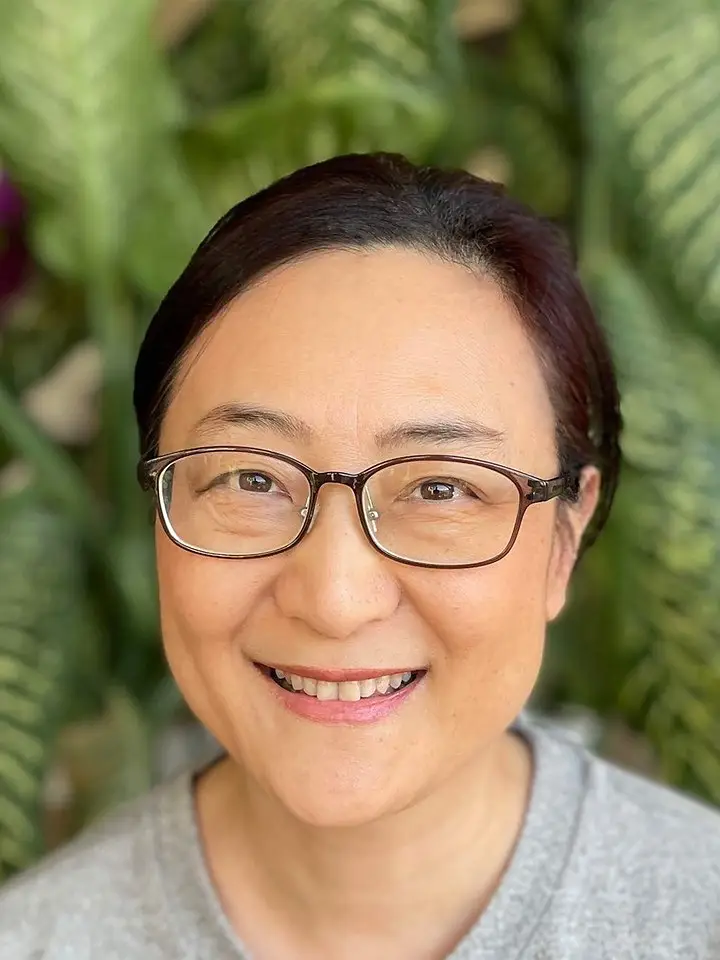
Yun Sun is a Hong Kong-based education consultant with Bennett International and Manager of Client Relations for Asia Pacific. For over a decade she has supported families relocating to Hong Kong, Mainland China, Japan, South Korea, Taiwan and other destinations across Asia. Yun grew up in Beijing and attended Peking University, before earning a B.A. in Biochemistry and Economics from Wellesley College and an M.B.A. from MIT Sloan School of Management. Before joining Bennett she worked as a management consultant at Booz Allen Hamilton in New York, later becoming a human resources specialist after relocating to Hong Kong, where she has now lived for twenty years. She is fluent in Mandarin and English, and conversant in French.

Jane Krill Thompson is an education consultant with Bennett International, based in Maryland, who specializes in supporting families relocating to Asia and the United States who have children with special learning needs. An expert in early intervention and early childhood development, she has served as Director of the Lourie Center Infant and Toddler Program in Maryland and of the Montgomery County Public Schools Early Childhood Special Education and Adult Education Programs. A lifelong global nomad, Jane has lived in Paraguay, Bangladesh, Sri Lanka, India and Romania, working with international schools and NGOs and serving as an international school Board Chair. She holds a B.S. in Child Development from Ohio State University and an M.S. in Early Intervention and Early Childhood Special Education from Wheelock College, and is a licensed school administrator.
Bennett International Education Consultancy works directly with hundreds of families each year across the globe. We support families by helping them make informed decisions about the best-fit schools for their children; with our guidance, they secure placement in preschools, private day schools, public/state schools, boarding schools, colleges and universities, including schools with particular programs, such as special needs support.