Moving to Mexico City with Kids? 8 Questions About Mexico City Schools, Answered
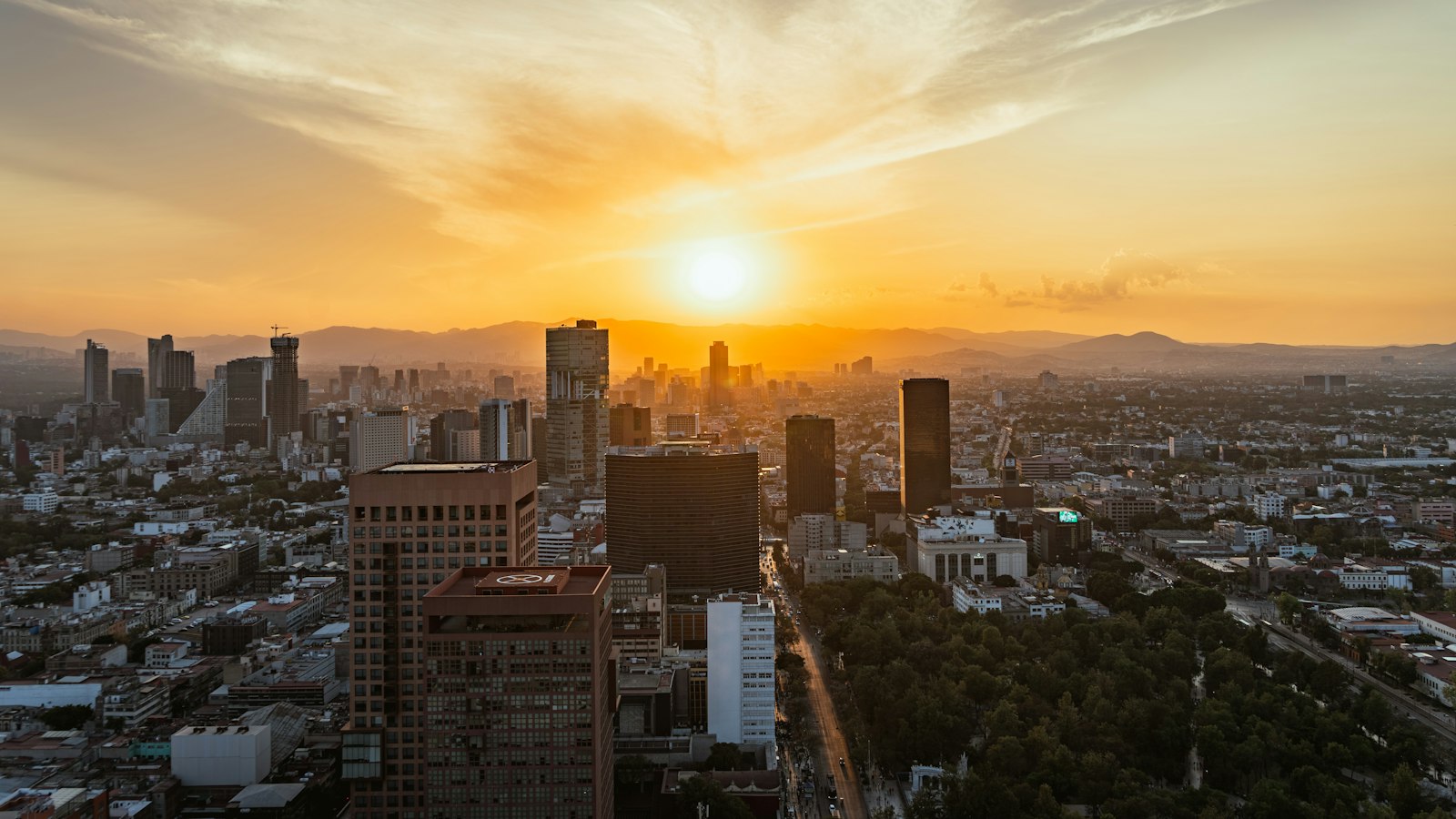
Mexico City gives relocating families one of the deepest private school markets in Latin America and, for most arriving families, no realistic public alternative. Bennett’s Mexico and Latin America consultant Celina Arbizú explains what actually decides the choice.
Who Is Answering These Questions
Celina Arbizú was born and raised in San Salvador, where she earned a teaching degree and a Bachelor of Education Sciences, and where she studied at and then worked for nearly a decade at the American School of El Salvador, including tutoring children with learning disabilities. She moved to Mexico City when she married, spent a year in Edinburgh while her husband completed a master’s degree, and raised two sons through one of Mexico City’s international schools. Both now study in Europe.
She has been an education consultant with Bennett for seven years and works with families across Mexico and Latin America, from Guadalajara and Monterrey to Bogotá, Lima, Santiago and São Paulo.
Do our children need to speak Spanish?
No. Mexico City’s international schools teach in English, and children arrive every year without a word of Spanish. Celina is direct about the alternative: for a family who will be in Mexico for a few years and then move on again, she would not recommend a traditional Mexican school, because the adjustment is steep and the credential at the end is built for a Mexican route.
What families most often get the wrong way round is which language is actually being tested. Spanish is taught from the first year, and at most schools part of the Mexican curriculum is delivered in Spanish, so children pick it up quickly and many leave fluent. English is the language the schools assess. Most will test English from around age five upward and expect a strong command of it from the first year of primary. A child moving from a school system that does not teach in English can absolutely be admitted, but English is the part to prepare for.
The same holds in Guadalajara and Monterrey, though the number of genuinely English-medium schools in both cities is much smaller than in the capital.
What is the difference between a bilingual school and an international school?
The labels overlap, and a school’s website is not a reliable guide. Celina’s definition is about the environment as much as the academics: an international school is one where English is the working language, where the families come from many countries, and where the school holds international accreditation such as the International Baccalaureate or a US or British inspection. She puts as much weight on the second part as the first, because the immersion is what the child actually lives in every day.
Two things are worth adding to that. The first is that the credential and the inspecting body are the part you can check for yourself. An IB authorization, a US accreditation, a British inspection, a French homologation or German recognition each tell you something specific about what a school can issue and who holds it to account. The word “international” on a website tells you nothing.
The second concerns the student body. Mexico City’s international schools are, in the main, majority Mexican; at the best known of them close to three-fifths of students are Mexican nationals, with US citizens the next largest group. Families who arrive expecting a majority-expatriate peer group are sometimes surprised, and most of them end up describing it as one of the best things about the move.
Does it matter whether a school is SEP incorporated?
It depends entirely on where your child is going next.
Incorporation means a school’s program is officially recognized by Mexico’s Secretaría de Educación Pública, so the studies it certifies count inside the Mexican system. Schools offering preschool through secundaria must hold that authorization. At bachillerato, the upper-secondary level, a school may run a Mexican-recognized program, an international one such as the IB, or both, and a school operating without official recognition is required to say so in its own documentation and advertising.
Celina’s practical read is the one most relocating families need. If you are in Mexico for a posting and will move on again, incorporation makes very little difference, because the receiving country will look at the international accreditation and the transcript. If your child may go on to a Mexican university, it matters a great deal. Ask which levels a school is incorporated at rather than assuming, and ask it early if university in Mexico is even a possibility.
What paperwork do we need before a school will talk to us?
Almost none. Since the pandemic, admissions across Mexico and Latin America have moved online, and a first approach is usually an enquiry form. Many families have already looked at two or three schools by the time they reach a consultant, often on the recommendation of a colleague who made the same move.
Documents come at application, and they vary by school rather than by national rule. One Mexico City international school’s published list asks for a birth certificate, a passport, immunization records, transcripts or report cards, and a teacher’s recommendation. One thing worth knowing, because a good deal of outdated advice still circulates: Mexico removed the apostille requirement for school documents in 2015, and a CURP is not a legal requirement for enrollment either. Individual private schools may still ask for either as their own policy, so the useful question is what this school asks for rather than what Mexico requires.
Immigration paperwork is a different matter. In Celina’s experience it is the piece that most often runs slow, and it can delay the point at which a child actually starts even when the school place is settled.
When should we start our school search, and what if we arrive late?
Start as soon as the move is real, and then know that arriving late is normal and usually fine.
Families move in October and in January, often with one parent arriving ahead of the rest. Mexico City’s international schools run rolling admissions and are well used to this, with start dates arranged around when the family actually lands. The constraint is not policy but space in the particular year group, and at schools that run small cohorts one full year group can close the door by itself. The larger schools tend to hold some capacity back for exactly this reason.
One piece of advice Celina gives that surprises families from the United States: ask your employer to write a letter supporting your application. In Latin America a letter from a known company carries real weight in an admissions office, and it costs nothing to request.
Should we choose the school or the neighborhood first?
The school, and this is the reverse of how it works in much of the United States.
In the US the address decides the public school, so families choose a district and a neighborhood and the school follows from that. Mexico City has no equivalent link. The schools are private, they sit where they sit, most of them in the west and northwest of the city, and your address entitles you to none of them.
So the order is: settle the school, then look for somewhere to live within reach of it. What makes this more than a preference is the traffic. Mexico City is the most congested city in the world on TomTom’s index, where a ten kilometer journey takes an average of thirty-four and a half minutes, and considerably longer at peak. Most families use school transport or drive, and thirty to sixty minutes each way is common. Children who walk to school where you live now will not walk to school here, and that is better known before you sign a lease.
Celina’s usual framing is that a parent can absorb a commute to the office more easily than a child can absorb one to school twice a day.
What happens if our child learns differently?
This is the question where the honest answer is the least comfortable, and it is the one worth asking earliest.
Provision in Mexico is less integrated than in the United States or the United Kingdom. A number of Mexico City’s international schools have formal learning support for mild needs, typically specific learning difficulties, ADHD and mild autism, usually delivered as a few hours a week of in-class and pull-out help rather than a self-contained provision. Therapies such as speech therapy, occupational therapy and applied behavior analysis are generally arranged privately, outside the school. For moderate to complex needs the options narrow to a small number of specialist schools.
That does not mean it cannot be done well. Celina places children with additional needs in Mexico City regularly, working alongside a Bennett special education needs specialist who reviews the testing and evaluations the family already holds. What it does mean is that the conversation belongs before the move is fixed rather than after it, so a family knows what is genuinely available and can plan around it.
What do families worry about that turns out to be fine?
Two things come up in almost every first call: security, and the commute.
The commute is the one that is real, and it is covered above. The other tends to shrink on contact with specifics. What families find is that the practical questions have practical answers, and that the daily routine of school, transport and neighborhood is more ordinary than they had pictured from a distance.
What Celina wishes more families knew earlier is smaller and more useful. The best-known and most expensive schools are not the whole market. A family doing their own research online tends to surface the same handful of names at the top of the fee range and conclude that Mexico City is out of reach without a full education allowance. There are a great many good schools below that tier, including bilingual and bicultural schools for families who want their children to come out of this speaking Spanish, and long-established French, German and Jewish schools serving their own communities. Which of those suits a particular child is the part worth a conversation rather than another hour of searching.
Talk It Through With Someone Who Knows Mexico City’s Schools
Working out whether an international, bilingual or community school is the right route for your child, and then finding the specific school, is the work our Mexico City consultants do every week.
Get in touch with a consultant who knows Mexico City’s admissions teams, for an hour of clarity →
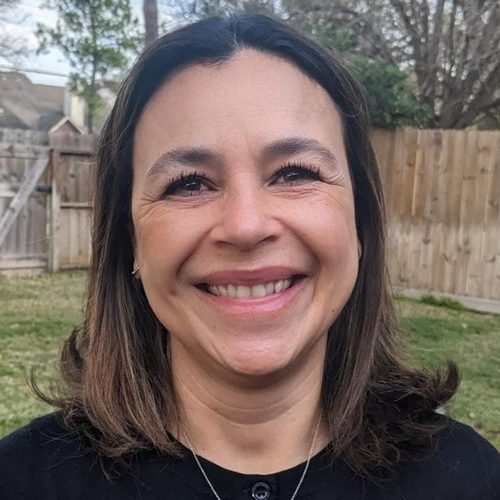
Celina Arbizú is an education consultant with Bennett International, based in Mexico City. Born and raised in San Salvador, she holds a teaching degree and a Bachelor of Education Sciences, and worked for nearly a decade at the American School of El Salvador, including tutoring children with learning disabilities. She moved to Mexico City when she married, spent a year in Edinburgh while her husband completed a master’s degree, and raised two sons through one of Mexico City’s international schools. For the past seven years she has supported relocating families across Mexico and Latin America, from Guadalajara and Monterrey to Bogotá, Lima, Santiago and São Paulo.
Bennett International Education Consultancy works directly with hundreds of families each year across the globe. We support families by helping them make informed decisions about the best-fit schools for their children; with our guidance, they secure placement in preschools, private day schools, public/state schools, boarding schools, colleges and universities, including schools with particular programs, such as special needs support.