Why Visiting a School in Person Still Matters

Families can now research schools from anywhere in the world, and that’s a good thing. An in-person visit still answers questions that no website, virtual tour or webinar can, and knowing which schools are worth the trip is part of a well-run search.
Virtual tours, online information sessions, recorded webinars and a school’s social media feed give families a level of access that didn’t exist a decade ago. For globally mobile families in particular, these tools are often the only practical way to start. We encourage families to use all of them.
We also keep seeing the same thing in our work with families across education systems and borders: the moment a parent walks into a building, the search changes. Something that looked right on paper feels wrong, or a school that was fourth on the list moves to first. Here’s why that happens, and how to think about visits when time and travel are limited.
A School’s Culture Is Hard to Capture on Camera
A website can tell you a school’s mission, its curriculum and the size of its gym. It rarely tells you how the place feels at 10:30 on a Tuesday morning.
On a visit, families notice how teachers speak to students in the hallway, whether a child who looks lost gets helped, whether the energy is calm or busy, formal or relaxed. Our CEO, Elizabeth Sawyer, calls this the texture of life at the school, and she looks for it on every visit: the student who stops to ask if you need help, the tradition of greeting children at the door. These impressions are subtle, and they’re a large part of whether a child will be happy there.
Seeing Teaching and Learning as They Happen
Schools describe their teaching philosophy online, and most do so accurately. Being in a classroom shows you how that philosophy plays out.
Parents can watch how engaged students are, how a teacher handles a question or a wrong answer, how much of the lesson is discussion and how much is instruction. For a family moving between education systems, these observations matter more still, because differences in pacing, expectations and classroom style are much easier to feel than to read about.
What Daily Life Looks Like for Students
A visit also shows what the student experience is like, which is different from what the school offers.
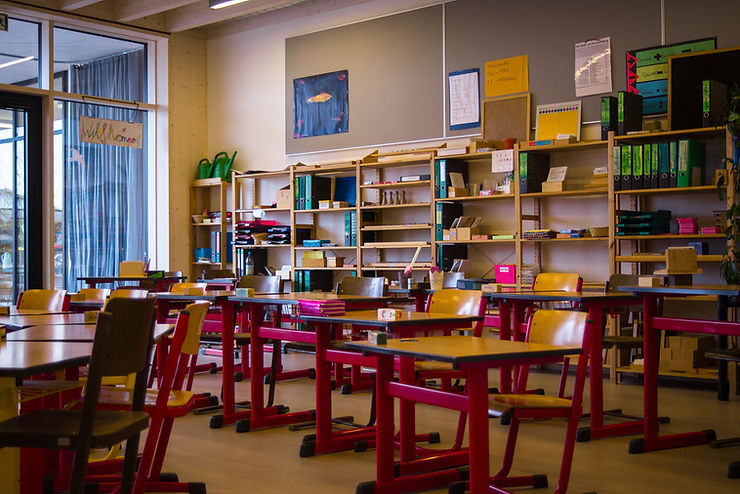
How do students move through the building between classes? Do they seem comfortable with the adults around them? What’s displayed on the walls, and is it student work or professionally printed posters? What happens at lunch? These details often say more about a school than any brochure.
For the child, there’s a second benefit. Standing in the space makes the idea of a new school real. Many children leave a visit able to picture themselves there, and that matters when a transition is coming.
Better Questions Come From Context
Online research is excellent for gathering facts. In-person visits are where the useful conversations happen.
Families who have walked a school ask more specific questions, because they have something to ask about: the group work they saw in the science room, the way the library was being used, the pace of the math lesson. Conversations with admissions staff, teachers and school leaders tend to be richer when they’re grounded in something both sides have seen.
Those conversations also tell a family how a school communicates. How open is it to questions? How does it talk about its own students? How does it work with parents once a child is enrolled? These are things a family will live with for years.
Fit Matters More in a Competitive Process
Competitive schools are building communities, not filling seats. In an application or an interview, a family that has visited can say specifically why a school is the right match for their child, and that specificity is noticed.
A visit also signals interest. Schools pay attention to families who have taken the time to come and look, especially when the visit was clearly thoughtful rather than a formality.
When a Visit Isn’t Possible
Not every family can visit every school, and some can’t visit any before a decision is due. International moves, compressed timelines and the simple cost of travel all get in the way.
In those cases, virtual tools do real work. Online meetings with admissions, a conversation with a current family at the school, a guided virtual observation of a classroom and a frank call with a Head of School can all fill in a great deal. Our consultants visit schools in their markets regularly, and part of what we offer a family who can’t travel is a current, first-hand picture of a school they’ve only seen online.
When even one or two visits are possible, we’d suggest making them count. Two well-chosen visits will often settle a decision that ten virtual tours couldn’t.
Making the Most of Each Visit
Visits are most useful when a family goes in with a short list of what matters most for their child, rather than trying to take in everything. That list might be class size, learning support, the arts program, the peer culture or the daily routine.
It helps to reflect after each visit while impressions are fresh, and to compare notes across schools in the same terms. If a school is closed when you’re able to be in town, a visit is still worth making; we’ve written separately about getting value from a school visit when school isn’t in session.
How a Bennett consultant helps
Deciding which schools deserve a visit, preparing for the visit itself and interpreting what you saw afterward are all things we do with families every week. Elizabeth shared more of her own approach to school visits in a recent podcast conversation, and we’ve described a different kind of school visit that looks past the tour route.
Get in touch with a consultant who has walked the halls of these schools, for an hour of clarity →
Bennett International Education Consultancy works directly with hundreds of families each year across the globe. We support families by helping them make informed decisions about the best-fit schools for their children; with our guidance, they secure placement in preschools, private day schools, public/state schools, boarding schools, colleges and universities, including schools with particular programs, such as special needs support.